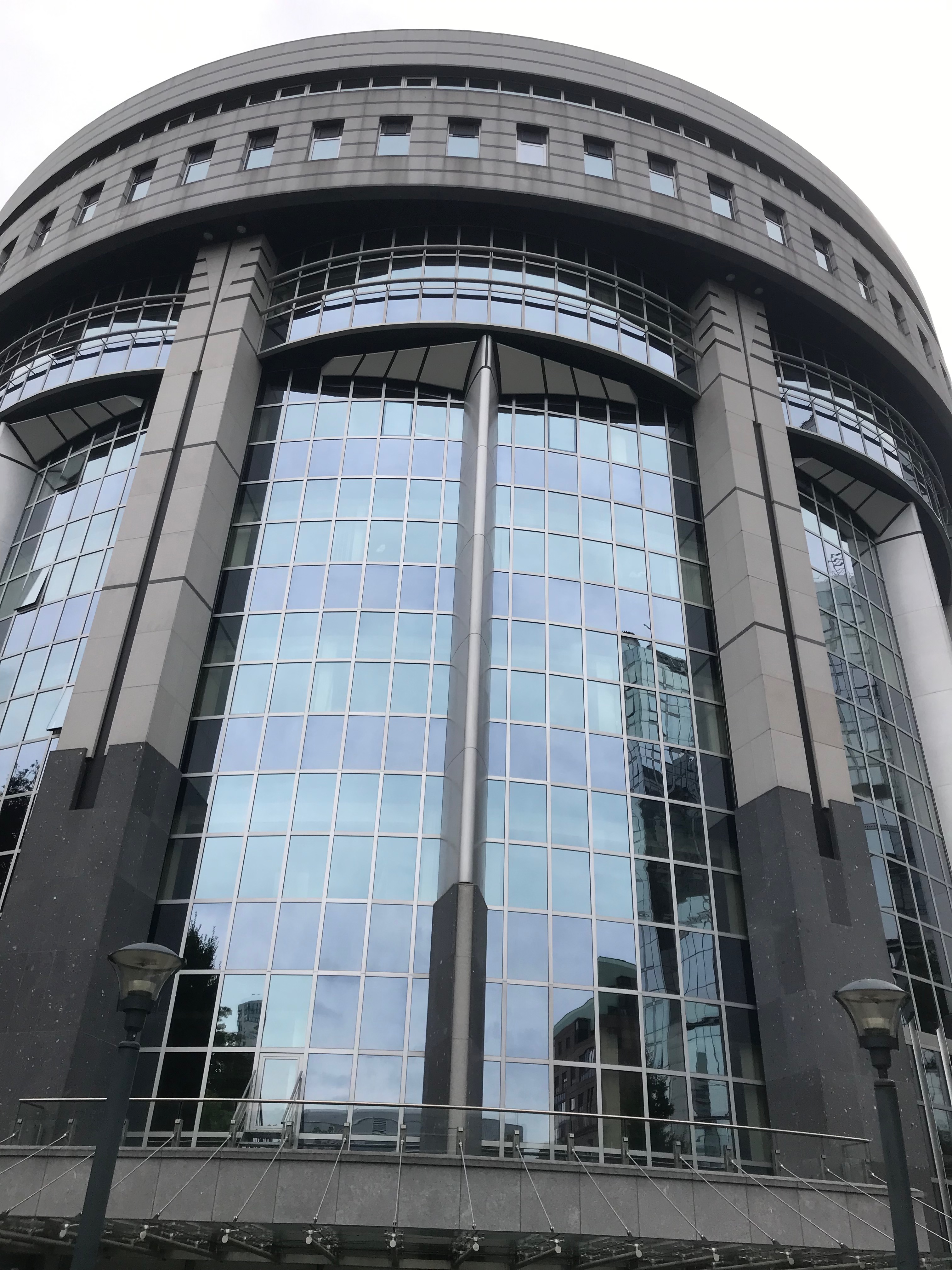
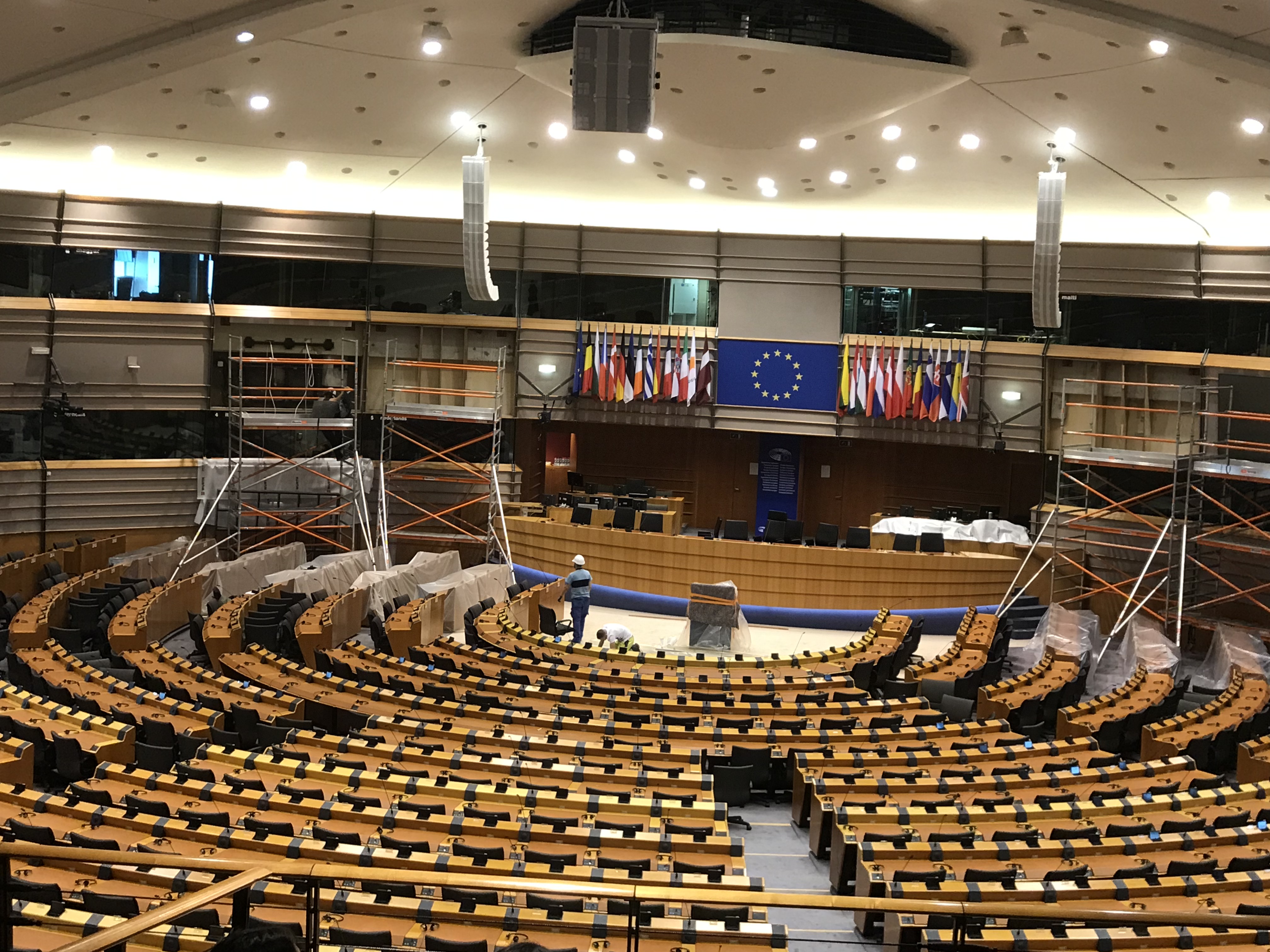
Today was fun because we got a special tour in the EU parliament. I have always watched the broadcasts on the news when important decisions were being discussed, so it was cool to see the actual room in person. The EU parliament is special because it is not directly a governing body over Belgium like the federal parliament and the the Flemish parliament. The EU parliament represents the EU (European Union) which “ is a confederacy comprised of 28 nations that preserve their sovereignty but work together.” (lecture) The EU parliament is currently ran by the President, David Maria Sassoli. The president is elected for a renewable two and a half years, meaning half a Parliamentary term. The European Parliament is made up of 751 members, who are directly elected. They are known as MEPs. The MEPs participate in committees to prepare the work for Parliament’s plenary sessions. There are 22 committees total in the EU Parliament. MEPs also sit in certain groups. Most people would think that they are seated by country or alphabetical order, but in fact they are organized by political affiliation. There are 7 political groups. The 7 political groups are the : EPP, S&D, Renew, Greens, ID, ECR, and GUE/NGL. There are also 44 delegations, whose specific role is to have relations and exchange information with parliaments in non-EU countries. A main part of the EU Parliament is the plenary sessions. During these sessions the MEPs will vote on European laws and take position on issues through debates. This is what most people can with either watch via the news, or sit in and listen. Topics can range from economic values and euro budgeting to immigration and refugee matters. I usually don’t have much knowledge about political matters, but I feel that Europe is a very interesting spectrum for politics because it has so many variables ranging from religion, culture, economy, and language.
One of the most fascinating topics discussed today was how certain borders are closed off to migrants, even though they are not technically supposed to be warding off incomers. Countries such as Austria have put a stop to new On the opposite end, countries such as Switzerland and Norway allow individuals into their country with open borders even though they are not part of the EU nor have any obligation to do so. One odd thing about the European Parliament is that they are not technically headquartered in Brussels, but it has always been the anchor location. Oddly enough, in 1992 the EU treaty decided that the official seat and the venue for most plenary sessions be in Strasbourg. A 2013 study by the European Parliament shows that €103 million could be saved per year should all EP operations be transferred from Strasbourg to Brussels (2014 prices). This is a significant amount, especially now in 2019 due to inflation, though it corresponds to just 6% of Parliament’s budget, or 1% of the EU’s administrative budget or just 0.1% of the entire EU budget.
 Amsterdam to Brussels