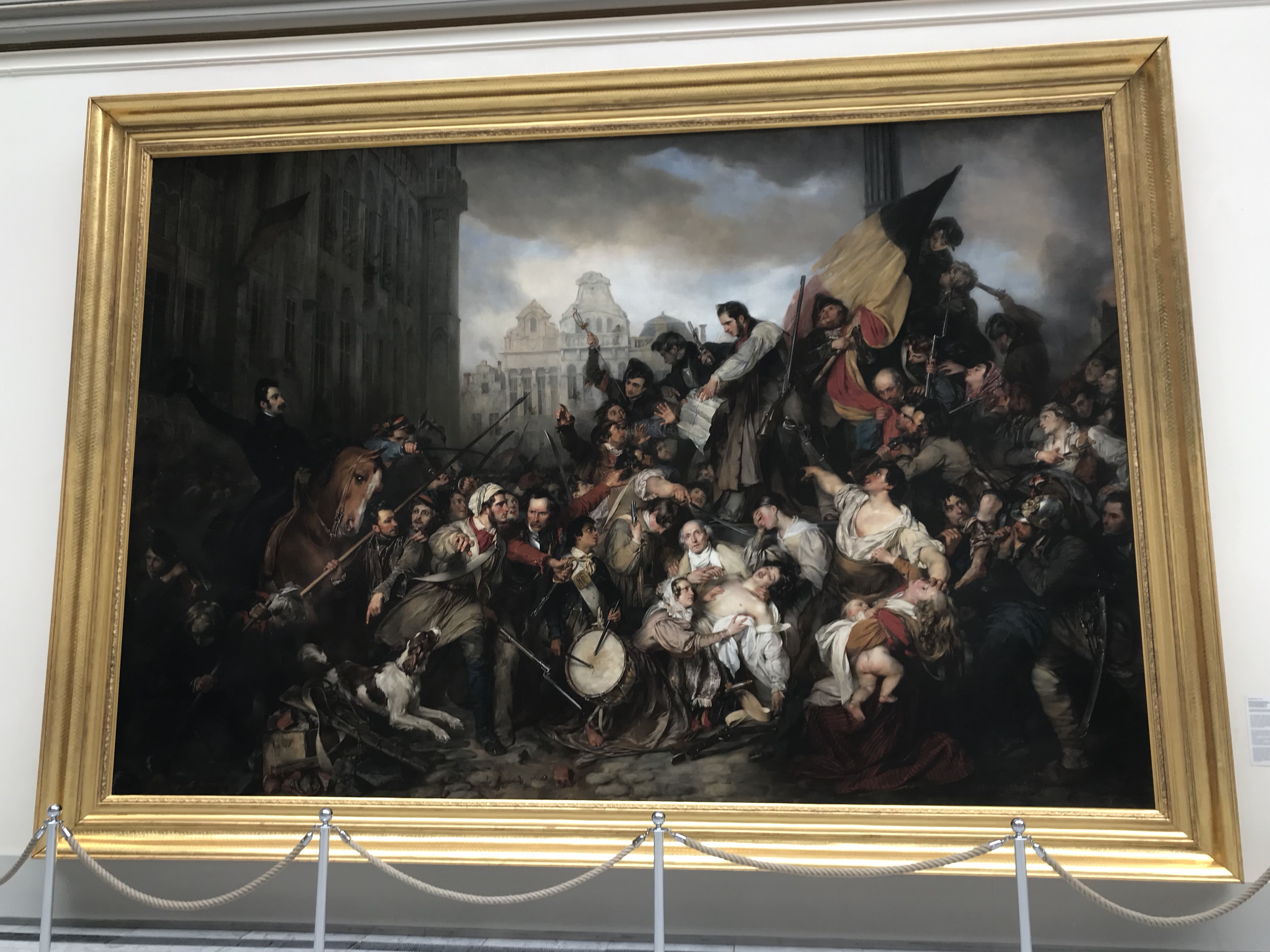
Today we began our class with an interesting topic, the art and culture of Belgium. It was interesting to learn how the Belgians are into such an artistic and individual country. Our lecture was a great way to prepare us for our excursion to the Royal Museum of Fine Art of Belgium. Once we entered the museum it was quite obvious on the talent we were about to be exposed to. In the main entrance there stands the beautiful piece “An episode of the Belgian Revolution of 1830” by Gustaf Wappers. The piece pf art is quite large, about equal in size to the Nights Watch by Rembrandt in the Rijksmuseum, Amsterdam. The painting is very vibrant and has so many characters to look at. Each face is so unique and the lighting creates an immense amount of realism, almost as if you are standing there amongst the characters.
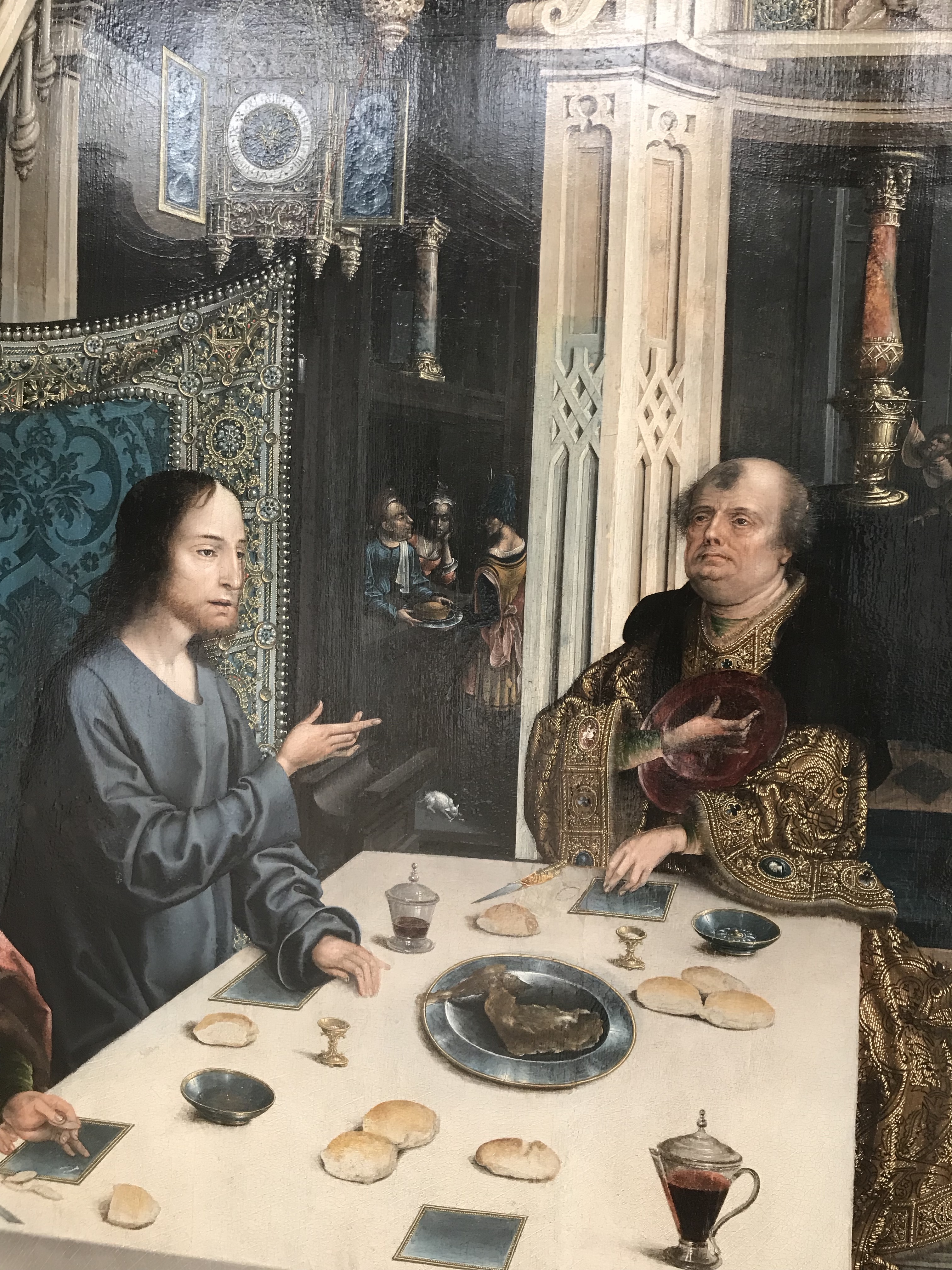
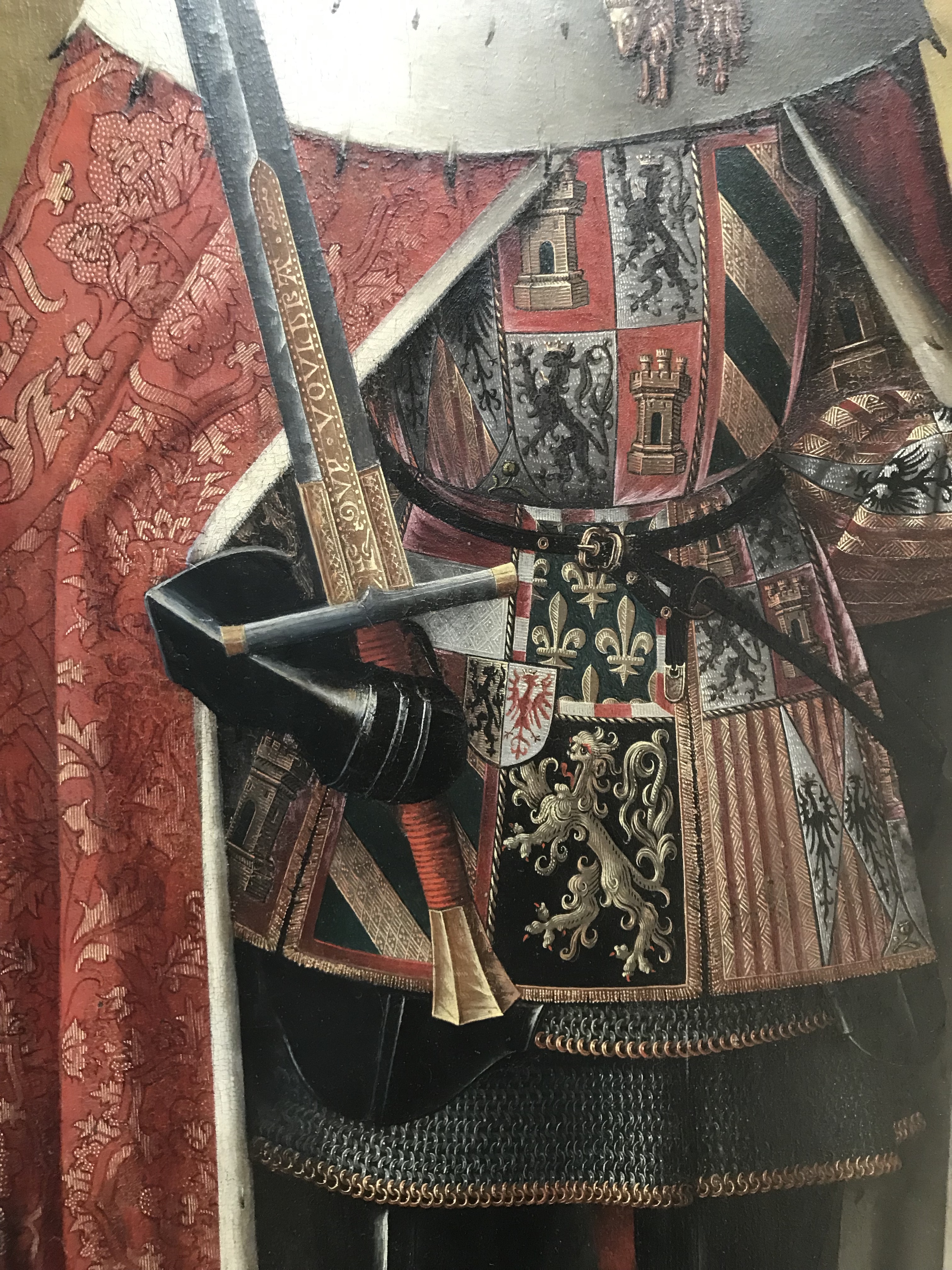
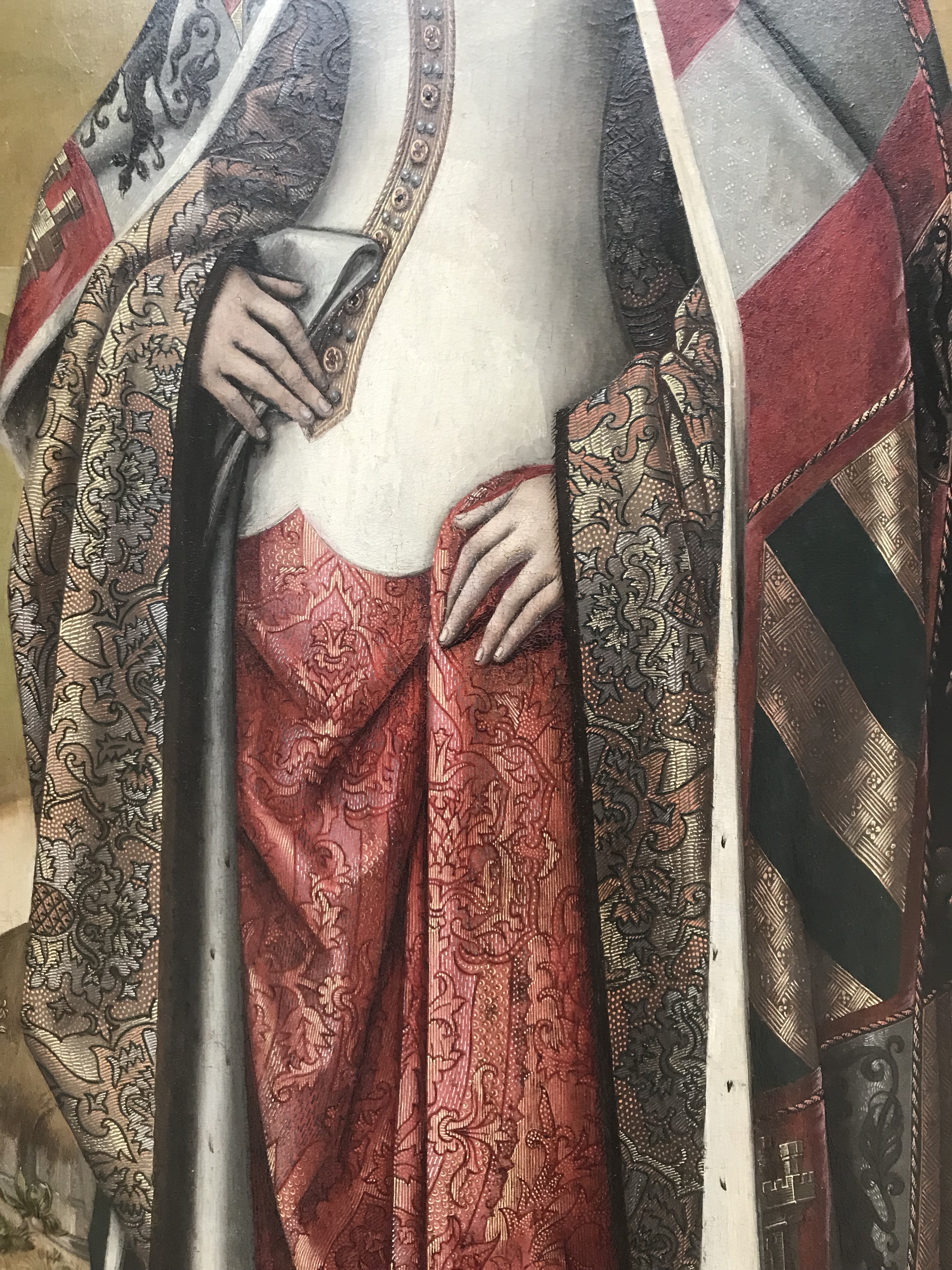
Walking through the main galleries of the museum was very enjoyable. I saw plenty of medieval art which always is pleasant to see. 15th and 16th century art is so different as opposed to later works. There is a simplicity in the characters, but minor details in fabric and scenic backgrounds help bring a quality to the art that people today struggle to replicate. It’s the Flemish printing business of books that led the way with details resulting in even better artists that depicted realism. Artists such as Jan van Eyck led the way in that field of style. He was a Flemish painter active in Bruges. His work comes from the International Gothic style, but he soon eclipsed it, in part through a greater emphasis on naturalism and realism. He achieved a new level of virtuosity through his developments in the use of oil paint.He was highly influential, and his techniques and style were adopted and refined by the Early Netherlandish painters. Unfortunately is art is primarily located in Brussels. There are other great artists’ works that I came across such as Peter Brueghel’s and his son Peter Brueghel II. Both of them create interesting works that depict the everyday life and common culture of Flemish people. From cooking food and drinking beer to dancing and having a laugh, Brueghel style is definitely recognizable. “ Brueghel introduced humanism and social commentary into his painting.” (pg.67)
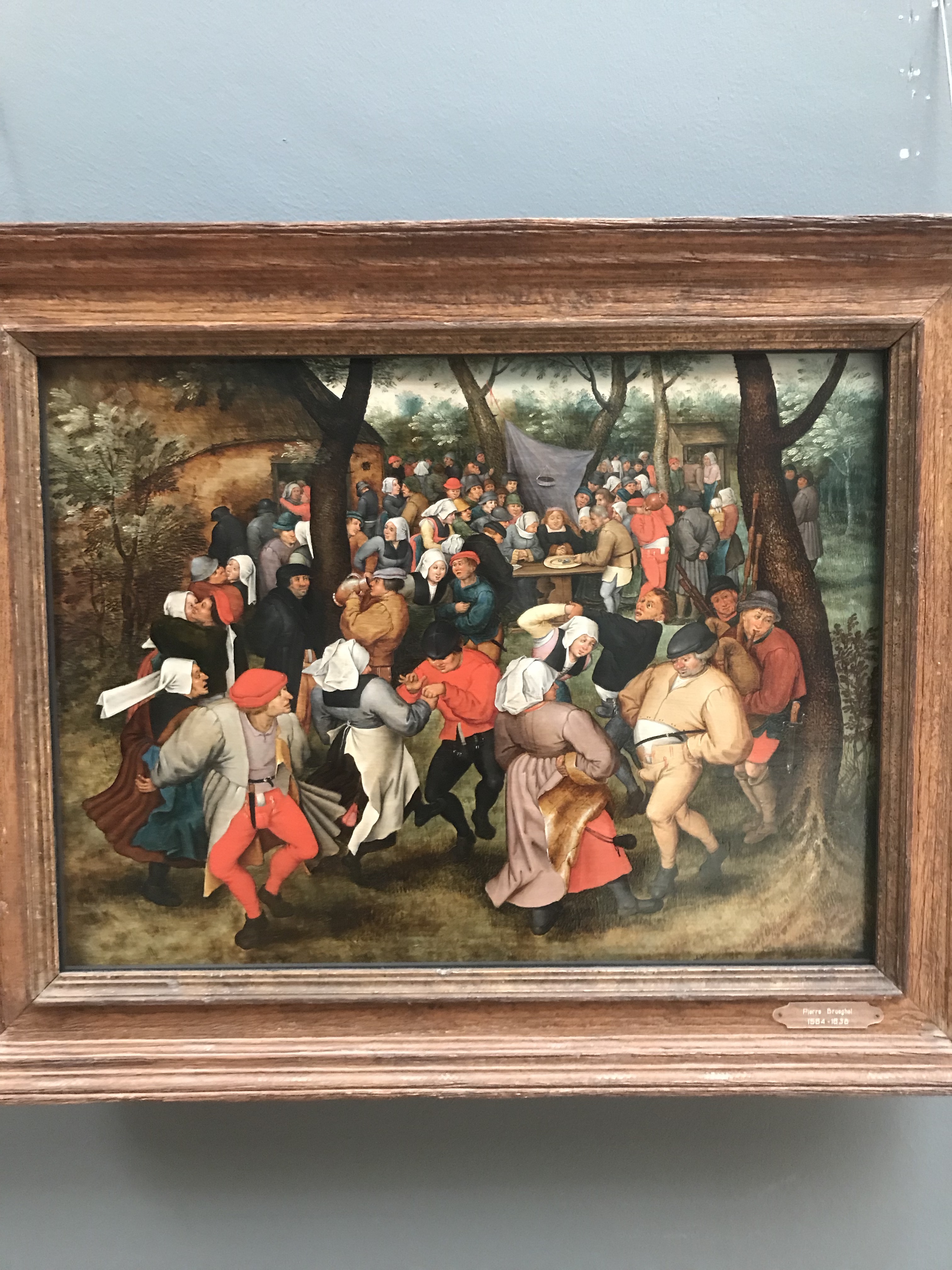
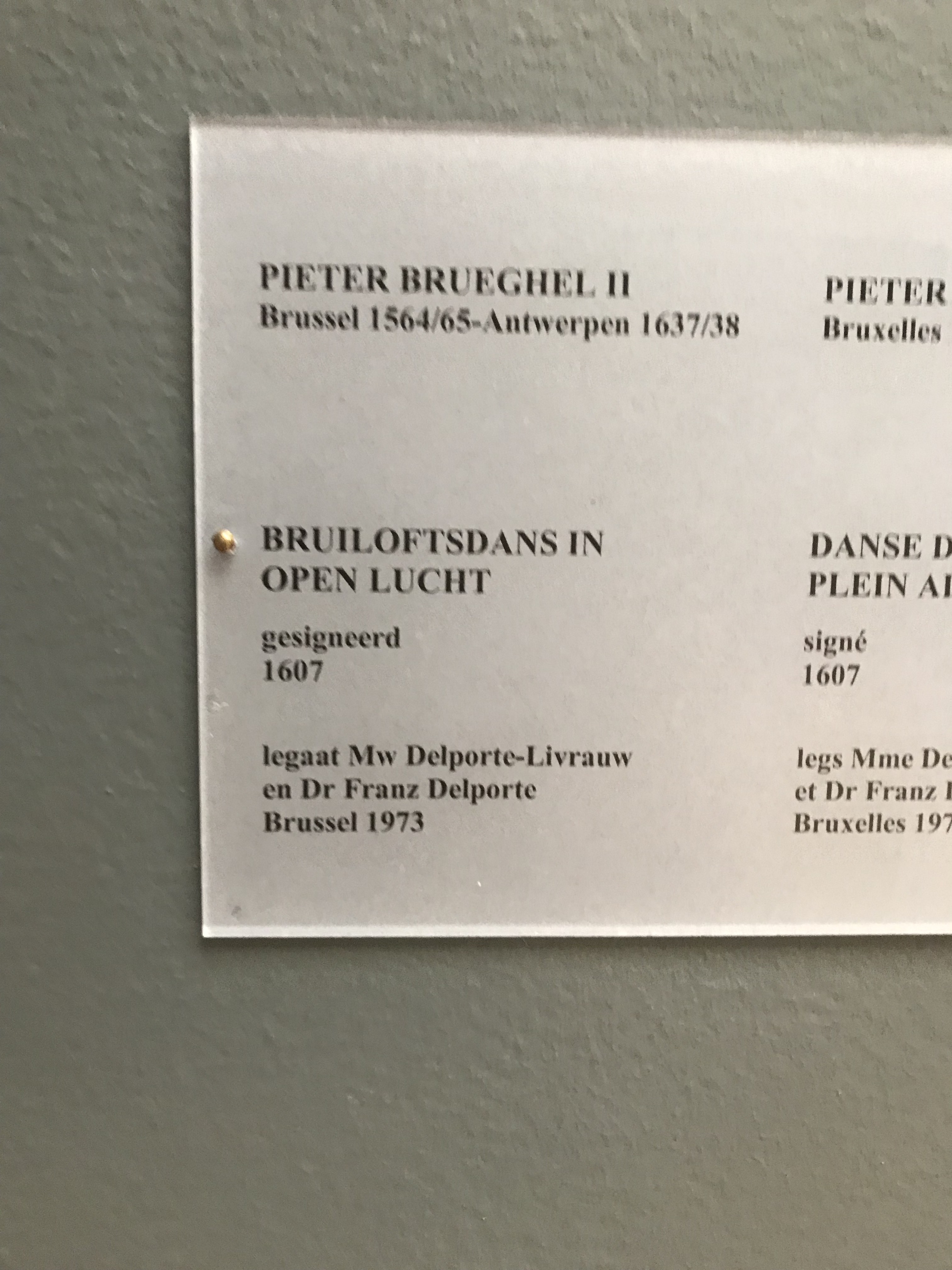
It seems to have a strong pattern that the Flemish artists prefer to be more open and direct in terms of their art and approach in life. This can even be seen in the works of Jan van Eyck and other Flemish primitives. It’s a style depicting hyper-realism that was in complete contrast to the idealized art of the Italian Renaissance. This also plays with the idea of the Walloon French speaking artists of Belgium that prefer to take a more surreal side on art. Much like the Flemish landscape being flat and open: “You can see the horizon and what you see is what you get…The Flemish like to contrast their straightforward manner of communicating with what they believe to be more the fanciful and rhetorical style that they attribute to the Walloons.” (pg. 67) I can definitely see a truth in this as the French have a strong cultural effect on the Walloons. Later within the Surrealist movement, René Magritte and Paul Delvaux proved that this fanciful art is not Flemish, therefore showing that there is a cultural divide in Belgium even with art.
 Amsterdam to Brussels