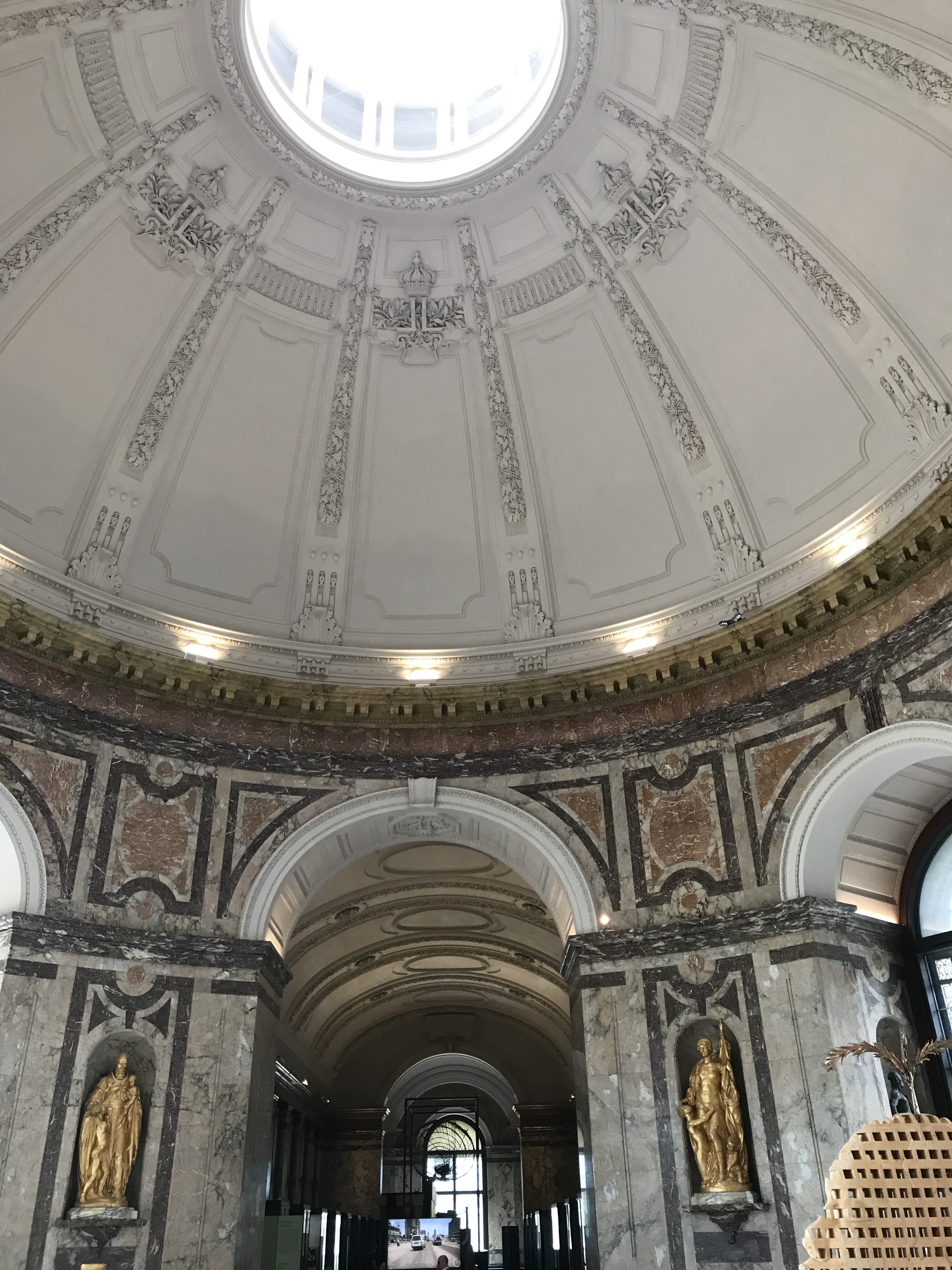
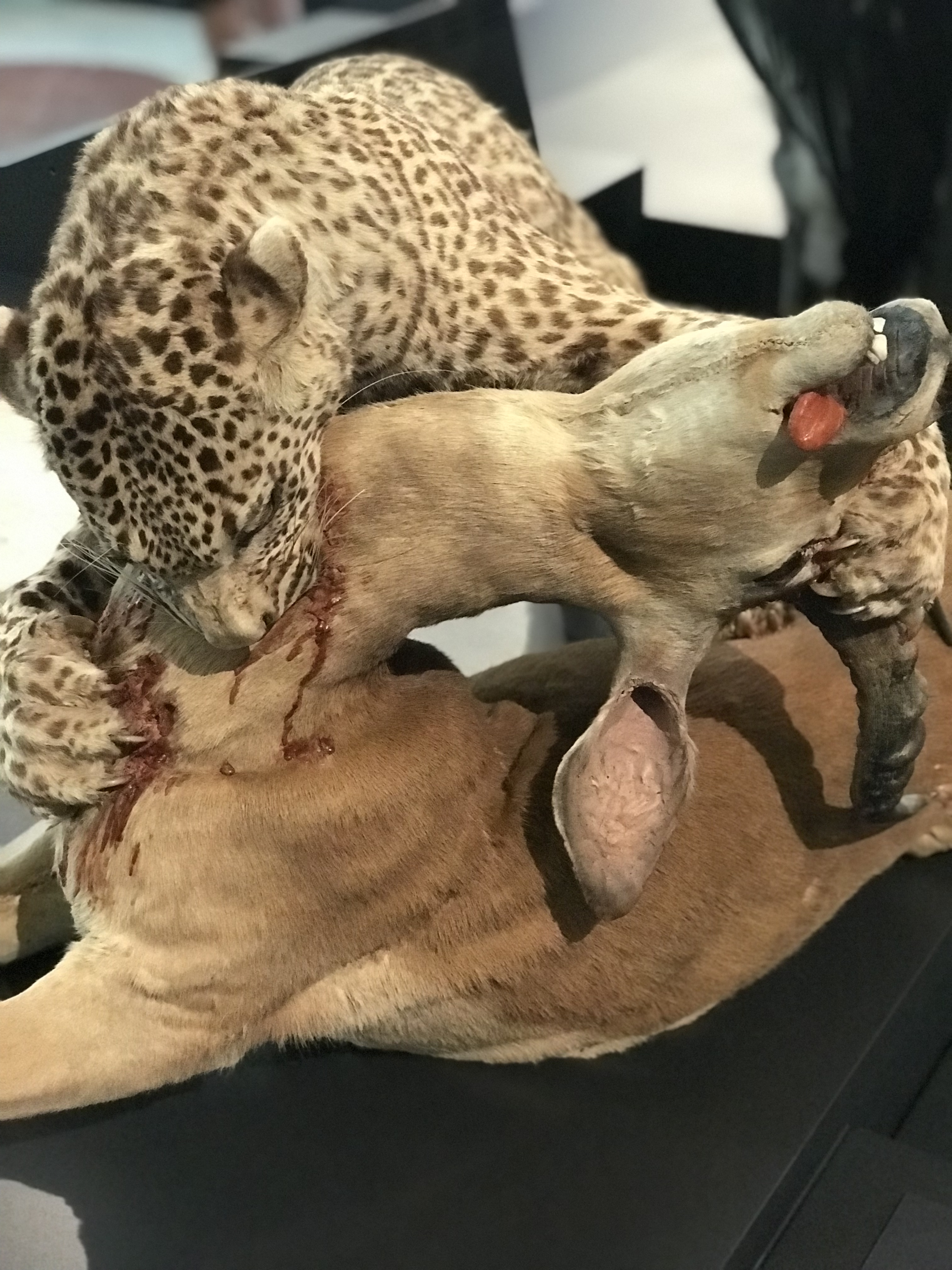
Today was an interesting visit to the Royal Museum of Central Africa. We took two buses into the area of Tervuren. I really enjoyed the town the museum was located in. When we arrived infant of the museum it appeared more like a palace than anything. The rooms were full of cultural exhibits ranging from artifacts of clothing, ceremonial masks, musical instruments, religious items, and native species. My personal favorite was seeing all the animals within The Congo. It’s amazing how dangerous of a territory The Congo is with so many predators including lions, leopards, and crocodiles.
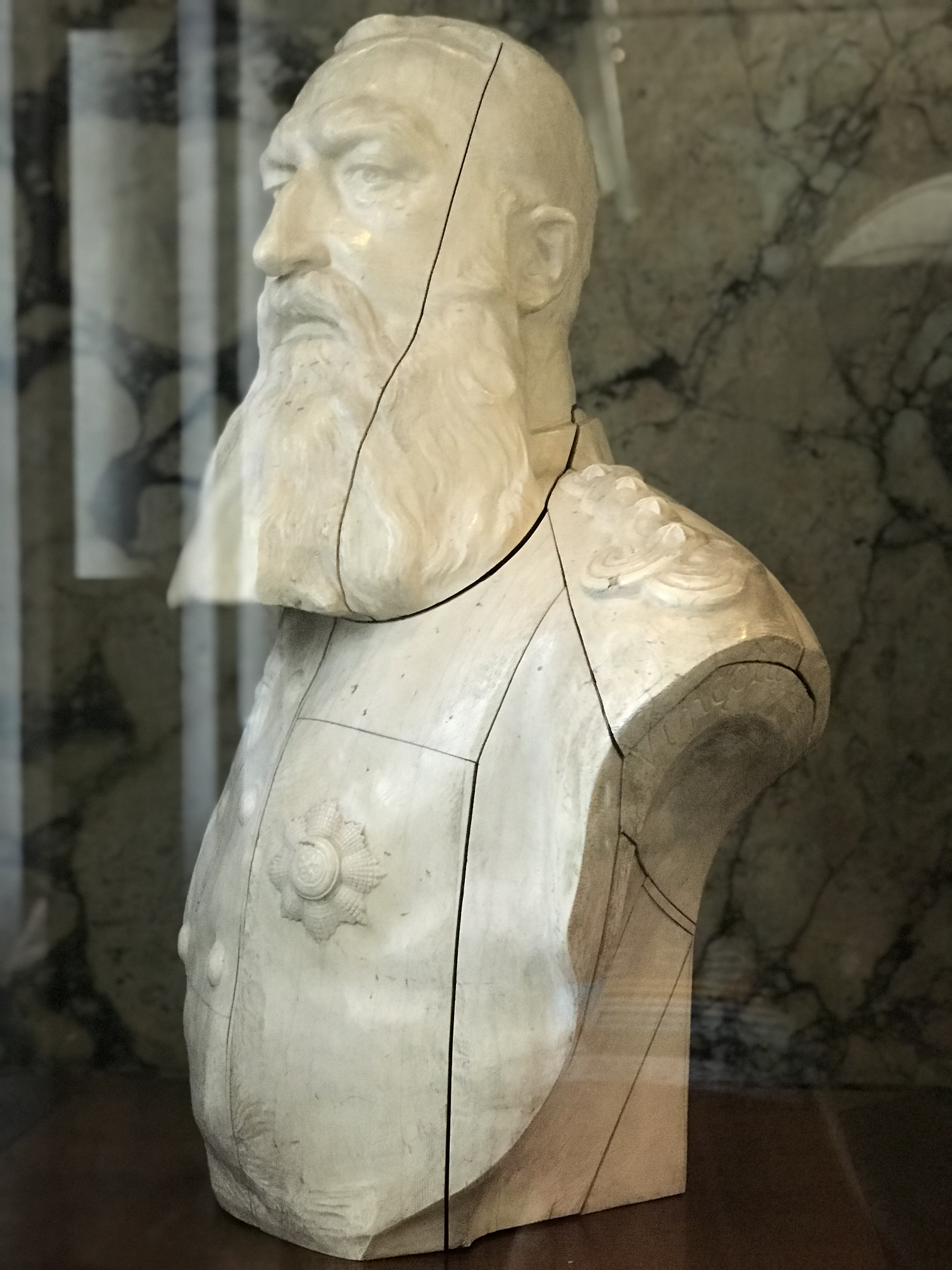
The building was build under the reign of King Leopold II. Leopold is quite a controversial figure of Belgium’s history. He was a very ambitious man. He erected many great buildings in Brussels and modernized the city, but in doing so he also destroyed the homes of many poor citizens. Leopold II also had an inkling for having a colony of his own. He obtained in central Africa The Congo, but made it seem for a humanitarian cause. He announced the International African Association. He also stated that his intention was to put an end to the slave trade and to civilize the indigenous population. He planned on doing this with christianity of course. Eventually Leopold announced in 1884 during a conference in Berlin that Congo would be a “free state,” allowing all European countries to intervene within free trade and religious missionary work. Over time, this colony becomes the forefront of harsh labor and almost a tyrannical government over the Congolese people. Leopold even goes as far as making peace with an Arab slave trader, Tippu Tip. Naives of Congo die even more, and within just a few years the population of one are dwindles from 40,000 to 6,000 native inhabitants. (lecture)
To put an end to this, the Belgium government intervenes. They make Congo a colony of the Belgium state (no longer a private colony under Leopold II rule). From this point on Congo slowly rises economically, with better healthcare, education, and less disease. It wasn’t until very recently that Congo now has political voting under a democratic design. It was under many dictatorships. It’s been a tough battle for Congo to persevere after so much turmoil and exploitation of natural resources.
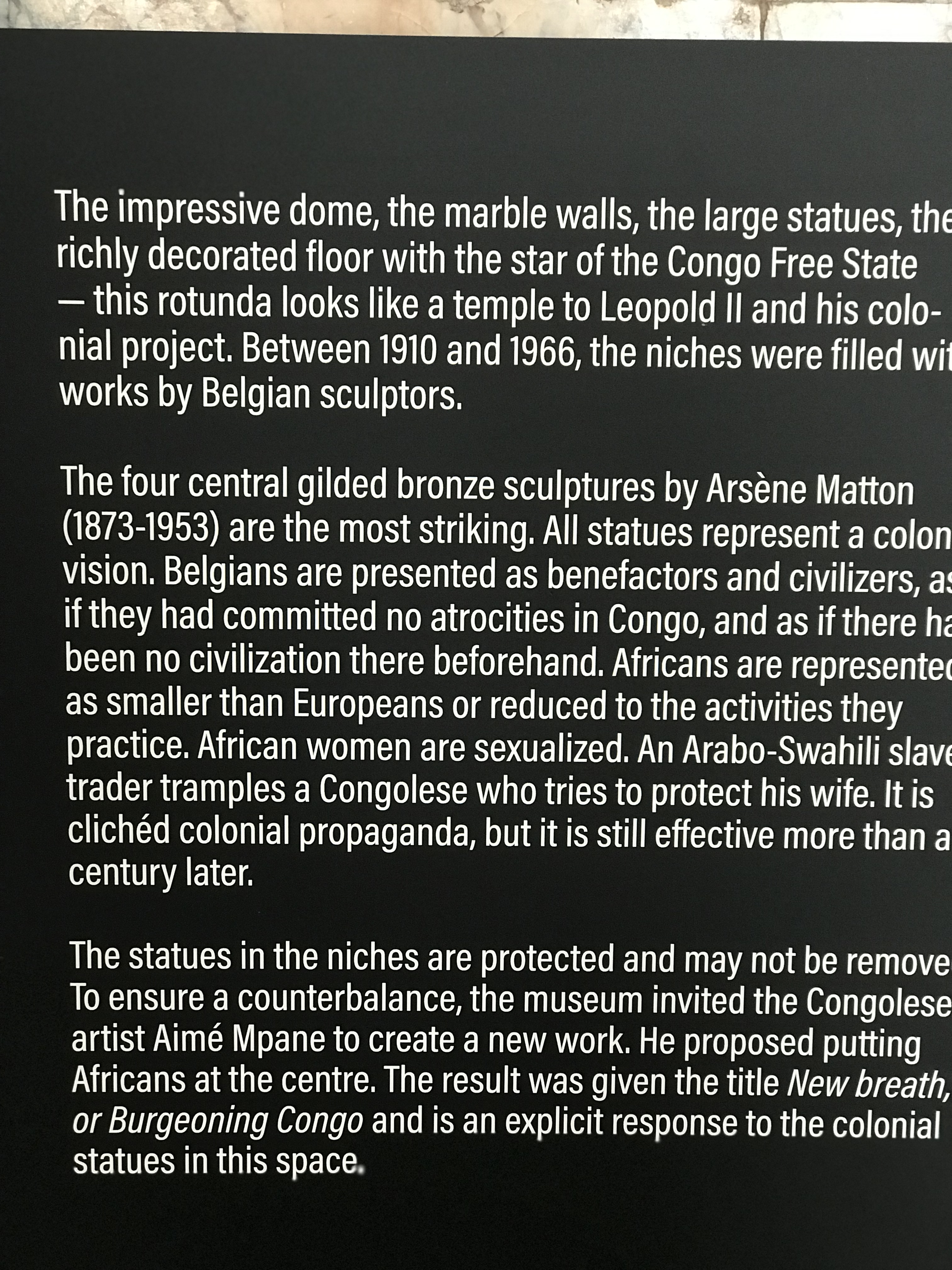
The museum today showed the lost history of Congo that most people wouldn’t get to see. Leopold II originally made this museum an attraction and marketing scheme for rich elites to invest in the colony. Within the building there are hundreds of initials within the walls commemorating Leopold II. I think it is safe to say he was quite proud of what he built. This lack of cultural appreciation eventually lost appeal in the 20th century and it became a colonial museum, but even this did not suit well with the public over time. Now the museum has been contemporized and escaped the image of a colonial museum. The Royal Museum of Central Africa is a hub for knowledge and resources particularly on Central Africa in a historical, contemporary, and global context. The museum exhibits special collections. It is a site of recollection on the colonial past. The museum aspires to be a dynamic platform for reciprocity and discourse between cultures and generations.
 Amsterdam to Brussels