Today we started off with a very interesting lecture on Brussels and then made our way to the Flemish Parliament. There we learned about the way the parliament operates. The Flemish parliament is focused on cultural situations such as education and economic policy. Therefore, the federal parliament is still responsible for the control f transportation, sports, social security, and the Army. The Flemish parliament elections are held every five years, and cannot be held earlier. After the elections, the seats in the parliament are divided among the parties. A coalition is formed, meaning that no one party is normally strong enough and overpowering. A majority in the Flemish Parliament consists of at least 63 members of parliament.
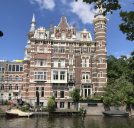
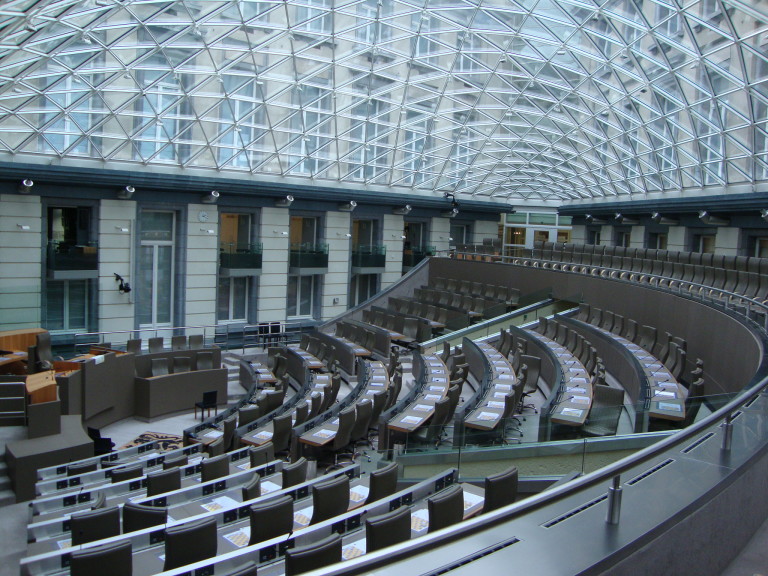
Walking into the the building was very exciting as it was quite modern, yet had a very historical setting. The building was originally a bank headquarters, so parts of the bank were preserved and tied in with the modern Flemish approach. I really enjoyed the main room of the plenary assembly. It was placed on thick glass floors and also had a modern glass dome ceiling. What made it even more special is that is was located technically between buildings that originally would’ve been an outside terrace. This design was to emphasize the idea of transparency and strength of the Flemish parliament. The parliament want people to come and visit, and there is no hidden discussions. The large pillars resemble the support it requires from each political party to work together in a coalition. It’s definitely interesting to be in a place where parties such as the N-VA organize. The N-VA is a Flemish nationalist party. They recently achieved a landslide victory in its campaign for complete autonomy for Flanders. “ Never in the history of Belgium has Flemish nationalism been politically stronger than it is today.” (pg. 140) It’s actually more believable now that a secession of Flanders from Belgium could happen!
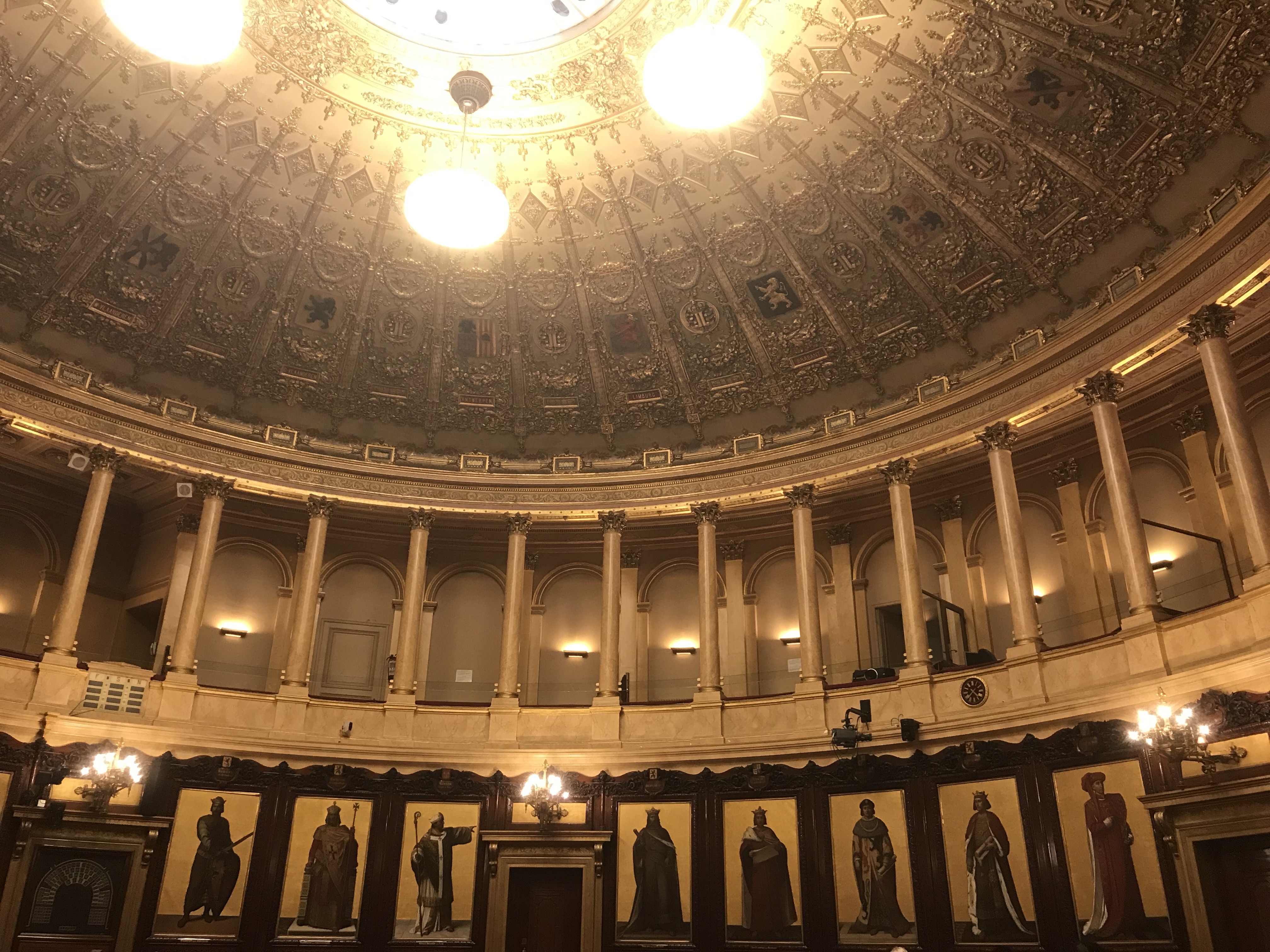
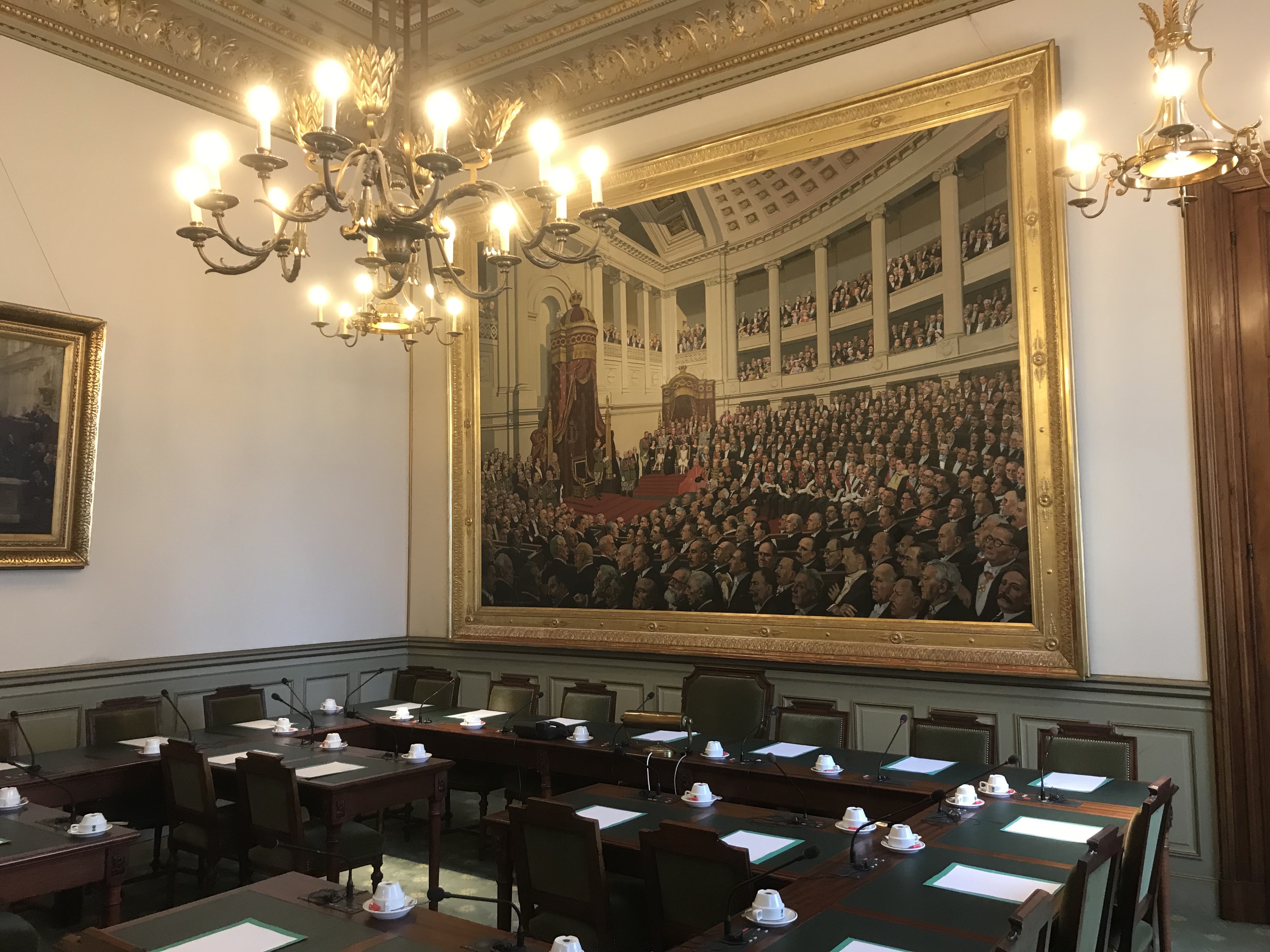
The Federal parliament was very different in almost every way. Security was much stricter. The building was much older, “the Palace of the Nation,” and the history of the parliament was shown throughout the rooms. Statues and busts of former prime ministers were placed in every hall. The main assembly room had a grand feeling of prestige. Seating was more classic. Green leather and dark oak was filled the assembly design. Regal paintings were on the walls and ceiling with a vast amount of gold. The tour of the federal parliament was very interesting, as one could really feel the pride and culture of Belgium democracy here.
 Amsterdam to Brussels