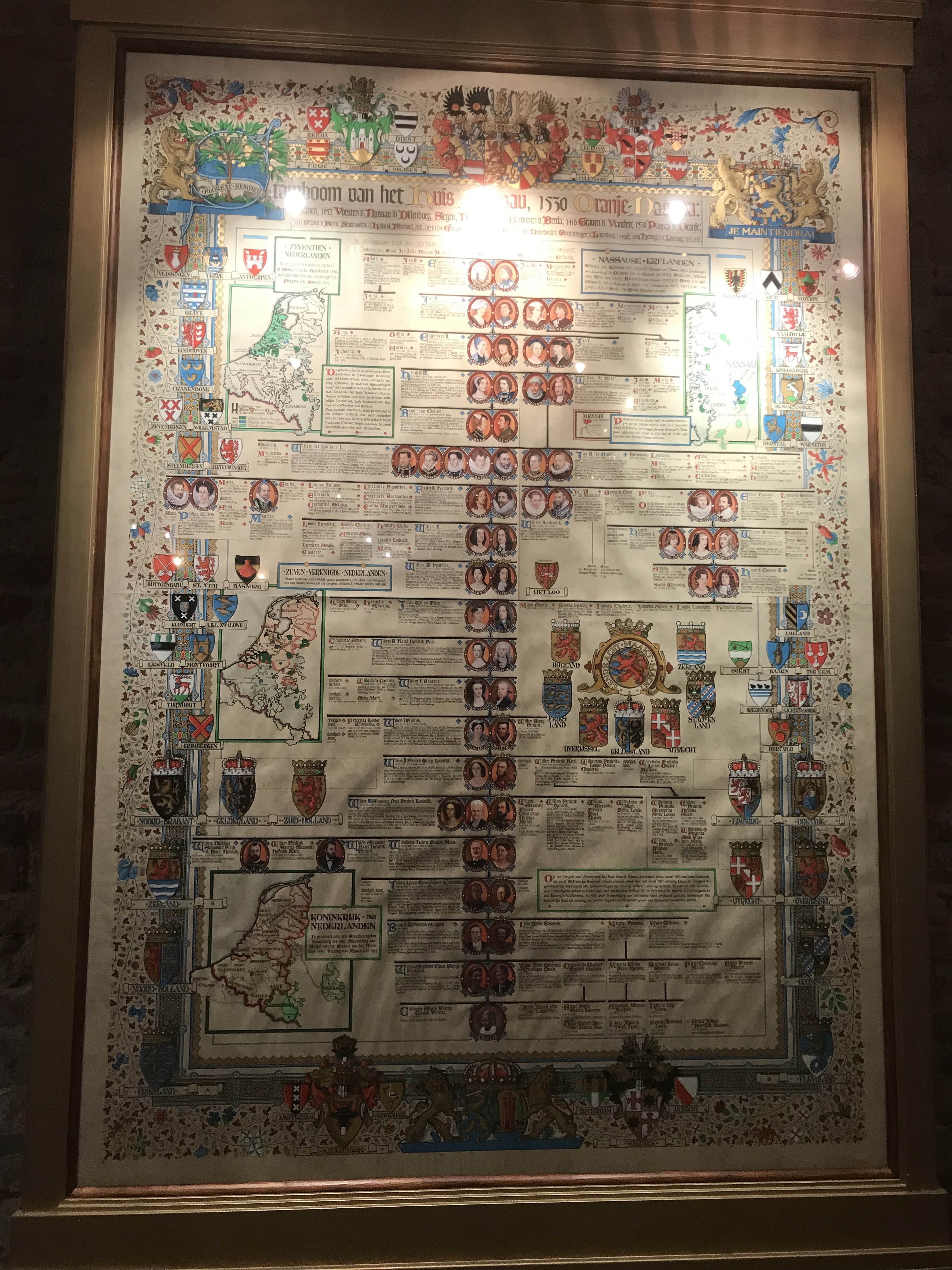
Royal Family Tree 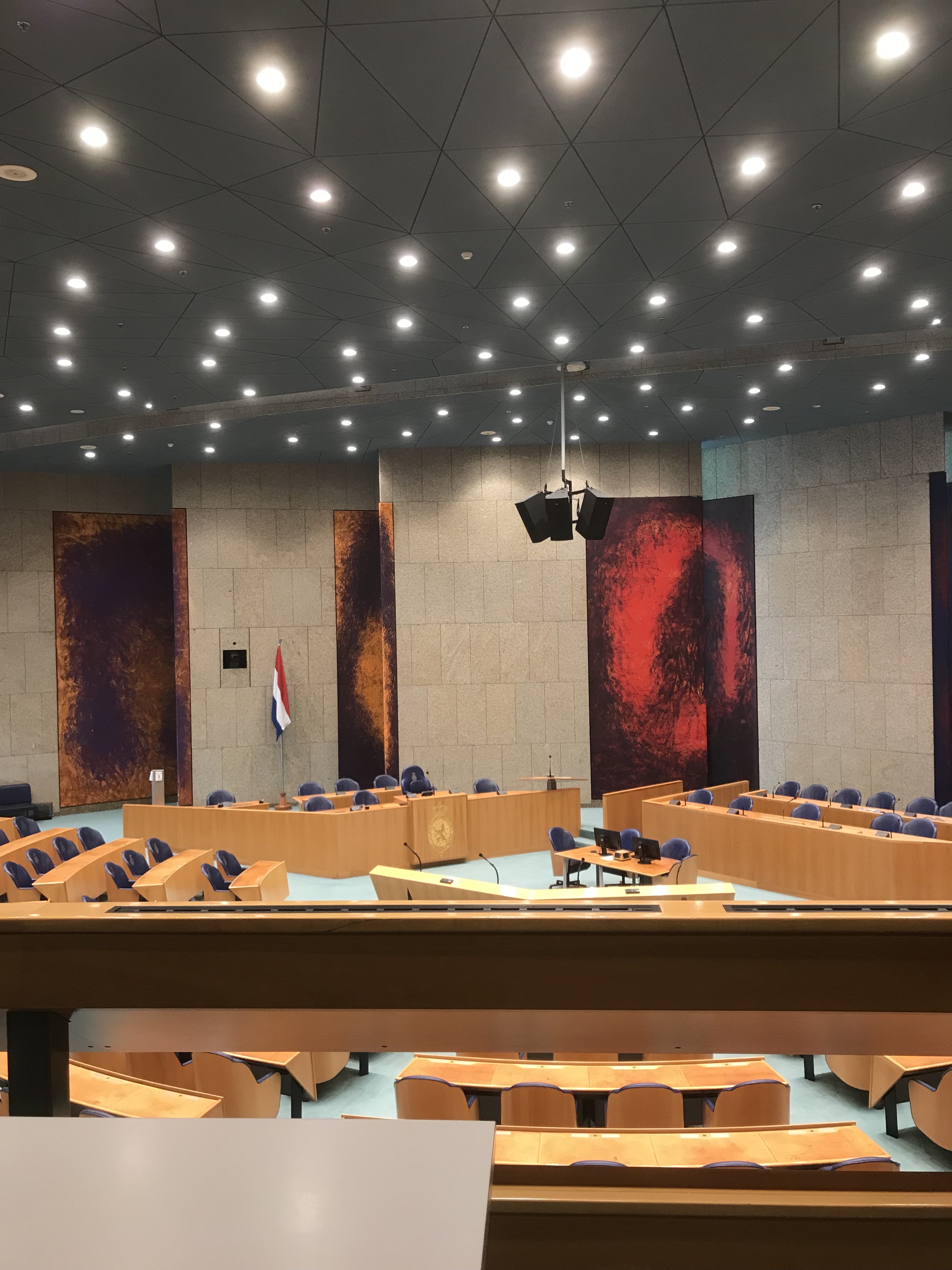
2nd Chamber 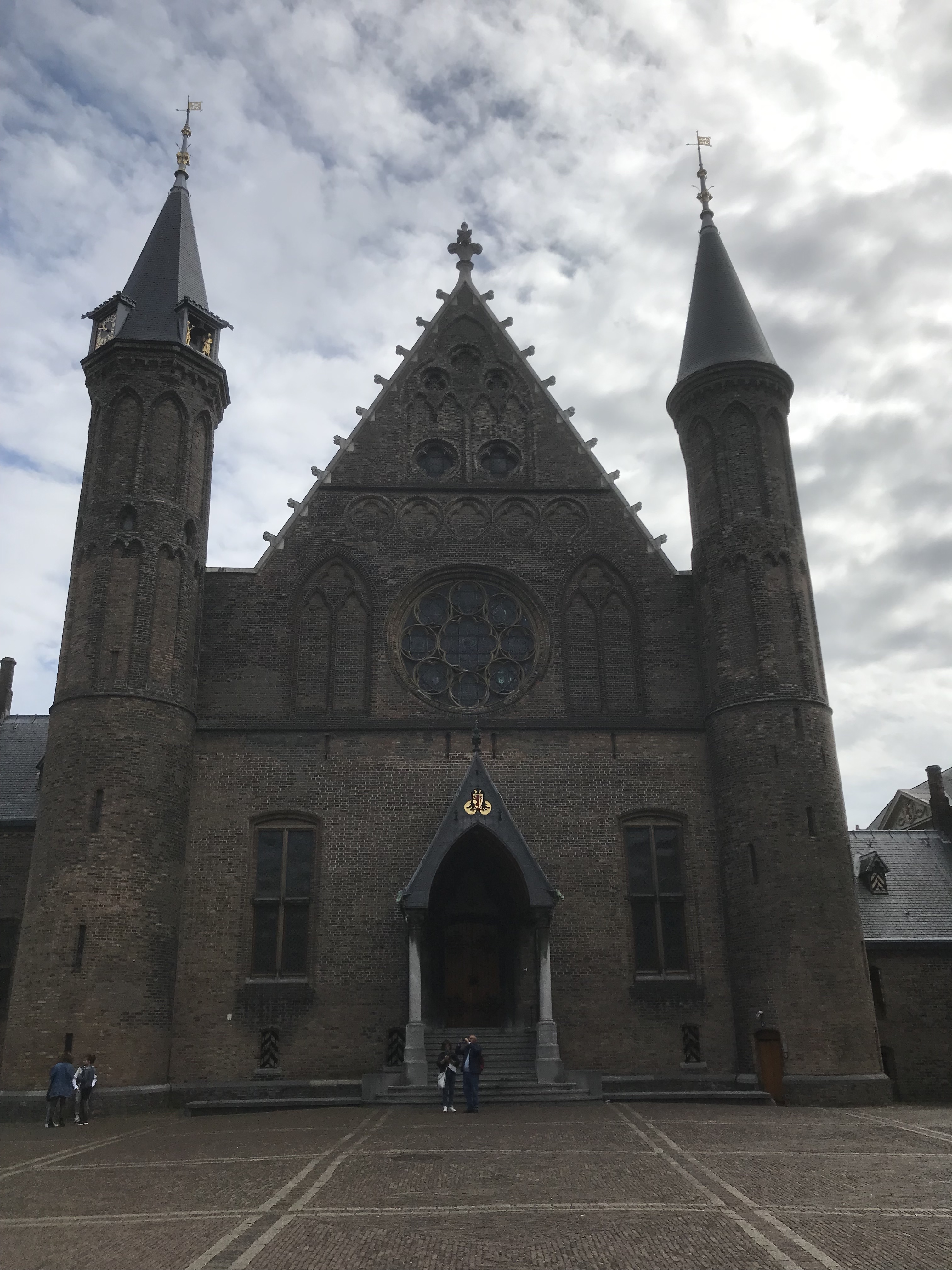
Ridderzaal
Today we did not have a lecture. We got up early and left immediately for Den Haag. The city is best known for its political ties to the Netherlands. “ One of the most visible moments when a king acts as head of the government is during the opening of the parliamentary year, on the third Tuesday of September…the monarch arrives at the government center in full royal pomp…the king then addresses the joint session of the two houses of Dutch parliament in the Ridderzaal in The Hague.” (pg. 3) Den Haag has a very long tradition with political issues. In fact, the first spot we visited on our tour was the Ridderzaal, which was the former castle of the counts of Holland, called Binnenhof, built in the 13th century. Initially it was a hunting fortress during the medieval ages, and eventually grew to become a place of justice, judgement, and formal meetings. The Binnenhof is situated in the heart of The Hague’s city centre and has been the location of meetings of the Dutch parliament, the Staten-Generaal, since 1446, and has been the centre of Dutch politics for many centuries.
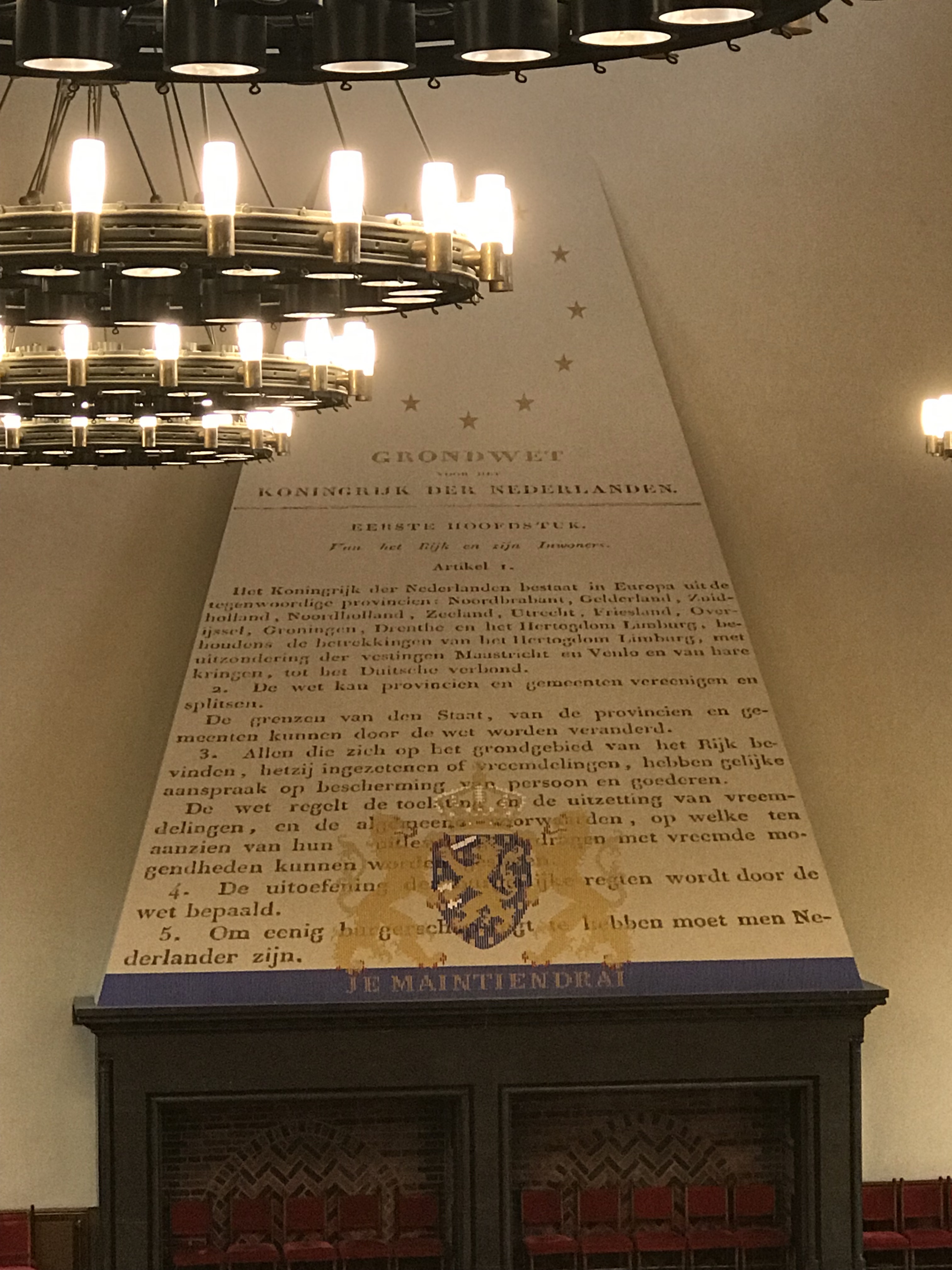
We took a walk through the Ridderzaal all the way up some steep stairs and approached the Knights’ Hall. In this hall you can definitely feel the significance and regality of the room. For a building of such old age, the hall is exceptionally large and noble. Huge beams support the roof, curved and placed in an artistic design. It almost resembles a viking hall, similar in structure, therefore showing the age of the design. Truly a remarkable sight. It’s very special to know that we stepped foot in not only a unique and extremely old structure, but a place that is still used today by the King and parliament. It is also very special because this is where the King’s throne is, and where the Speech from the throne occurs. Every year the monarch travels from Noordeinde Palace by Golden Coach to the Ridderzaal (Hall of Knights) in the Binnenhof of The Hague to read the speech before a joint session of the States General. After the speech everyone shouts “long live the king” followed by three large cheers. The King/Queen will then leave along with the royal family members and the joint session is declared to be closed. This is all more or less a tradition rather than necessary in the political system. The King is no longer in direct power due to ministerial responsibility, which states that “ all actions of the king subject to ministerial approval, and bills and all other ‘royal decrees’ need a minister’s signature…the king’s signature is required for all bills to become law as well, but as he is to remain neutral and stand above the parties, his refusal to sign remains a rather theoretical scenario.” (pg. 3) Although the King or Queen does not have such a firm grasp of power over the country nowadays, most people still support the royal family and the idea of a constitutional monarchy.
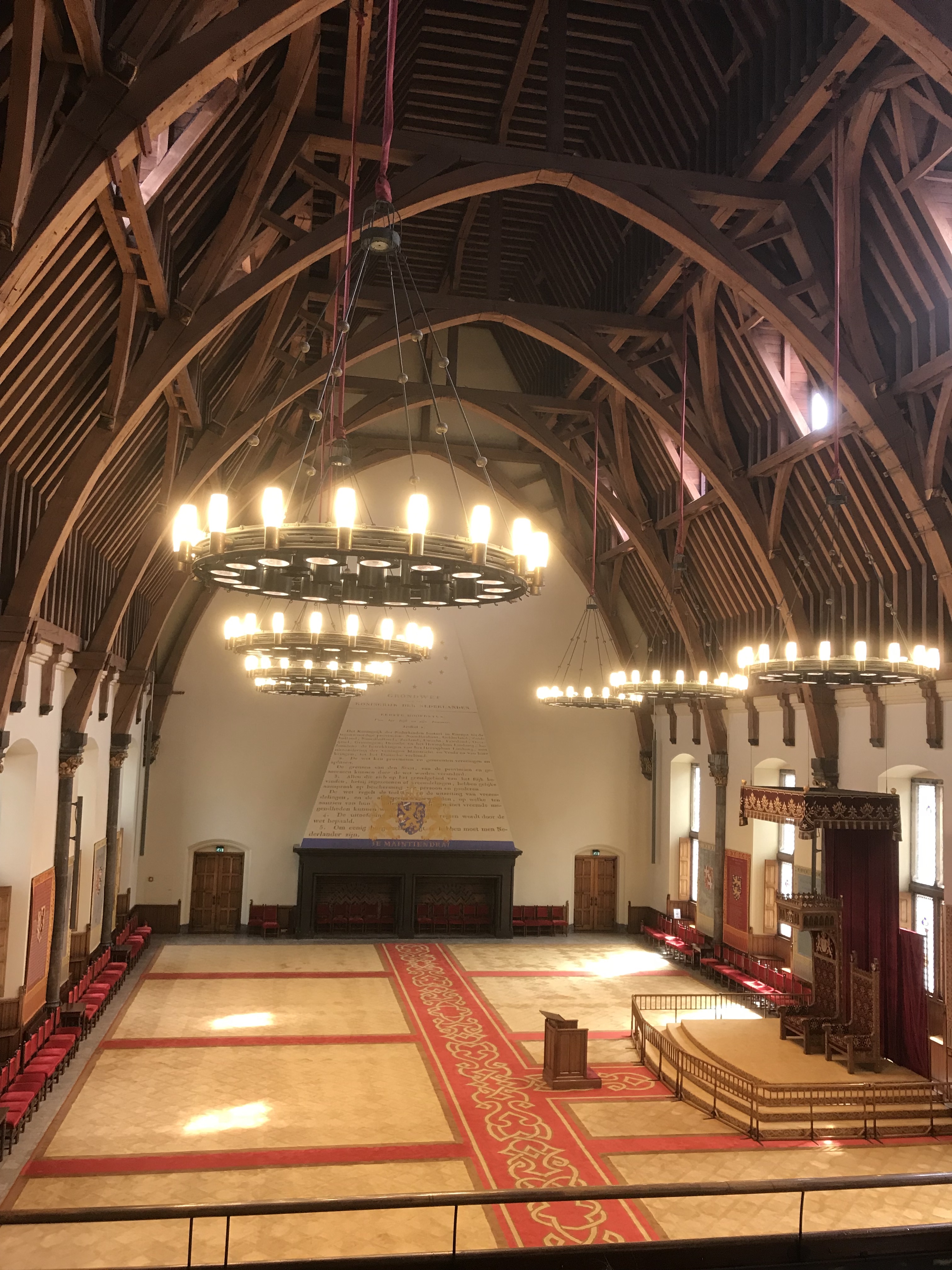
Knight’s Hall and King’s Throne 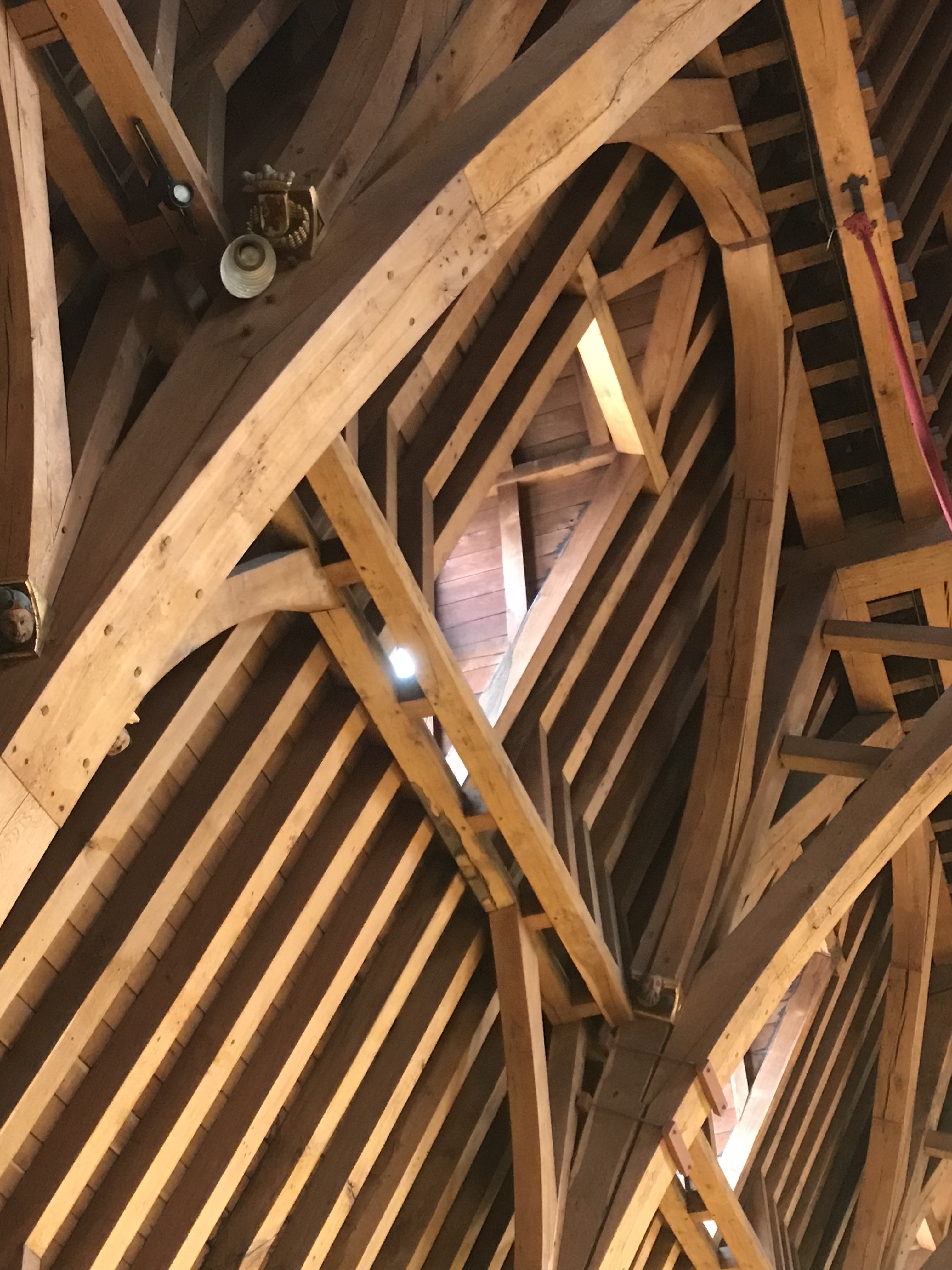
Little Eavesdropper sculptures 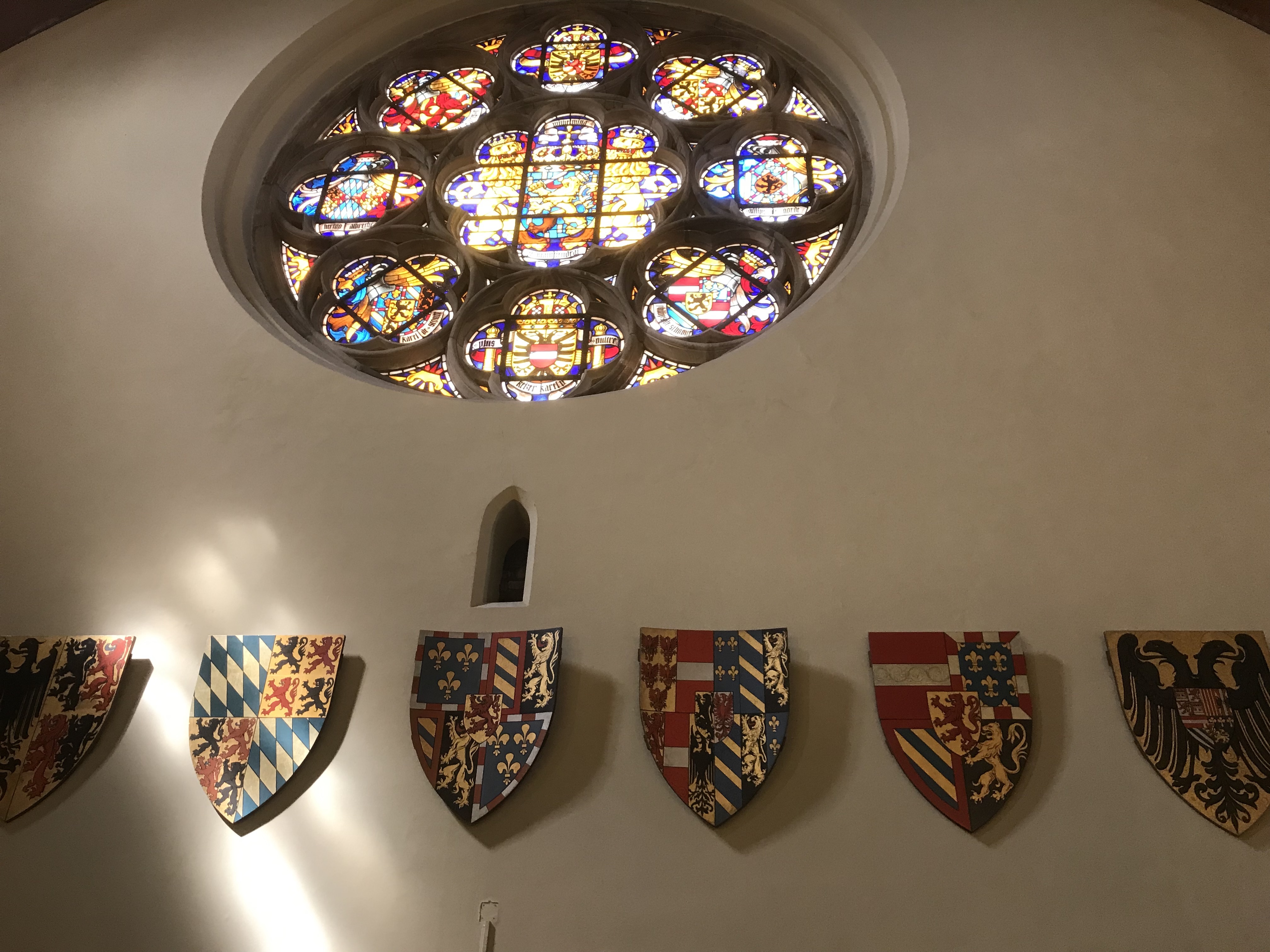
Coat of Arms of the Provinces
 Amsterdam to Brussels