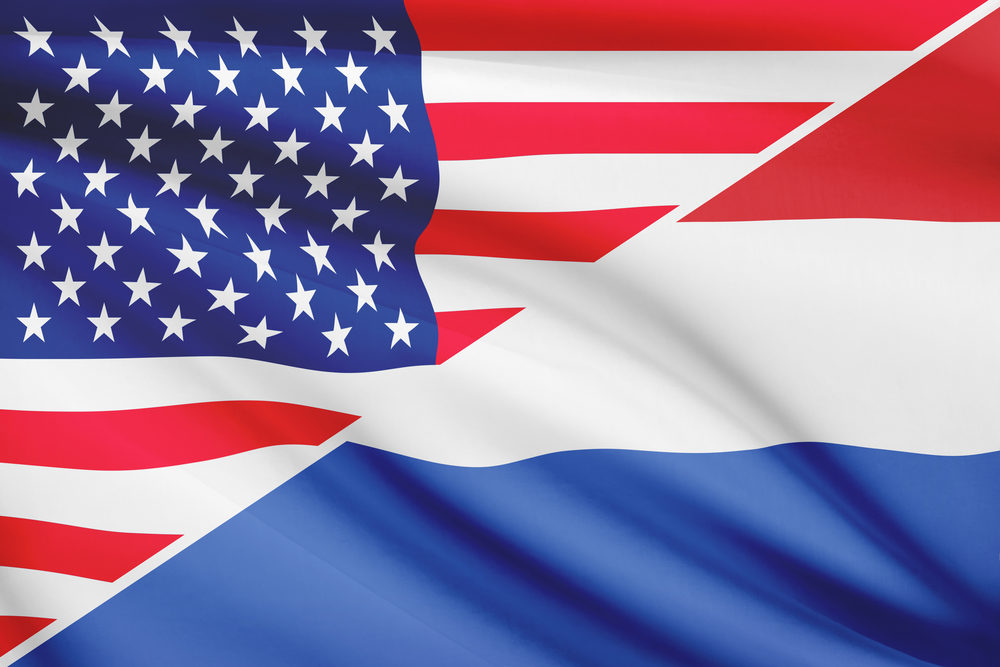
Happy Independence Day to the U.S of A!! 🙂
Today’s word in lecture was Natafelen. This word describes the talking and conversation after having a meal. Family members tend to eat then remain at the dinner table and talk for hours! I definitely can see this as a usual activity for the Dutch. So far I have noticed the Dutch love to sit and chat with friends over a coffee or beer outside by a nice cafe.
Following our Dutch key term of the day, we pivoted our main focus during lecture towards the colonial history of the Netherlands. The two major trade companies of The Netherlands were the VOC, which focused primarily on trade and exploration, and the WIC, which began solely for piracy against the Spaniards, but reluctantly shifted into the largest slave trade company in the world. For the Dutch, the idea of sea travel and international trade was no fuss. The Netherlands had a perfect location by the sea. Ship building was already in their culture as well as the proper infrastructure in cities such as Amsterdam. Another reason The Netherlands prospered so well with the VOC and WIC was their massive increase in population due to foreigners, as explained in further detail by William Shetter in The Netherlands in Perspective : “ For centuries goods and riches flowed into Amsterdam, but so did people. Traders from other European countries, protestant refugees from the Spanish-held South and later France, Jews from Spain and Portugal and later eastern Europe, peoples of other races from all over the trading empire.” (pg.46)
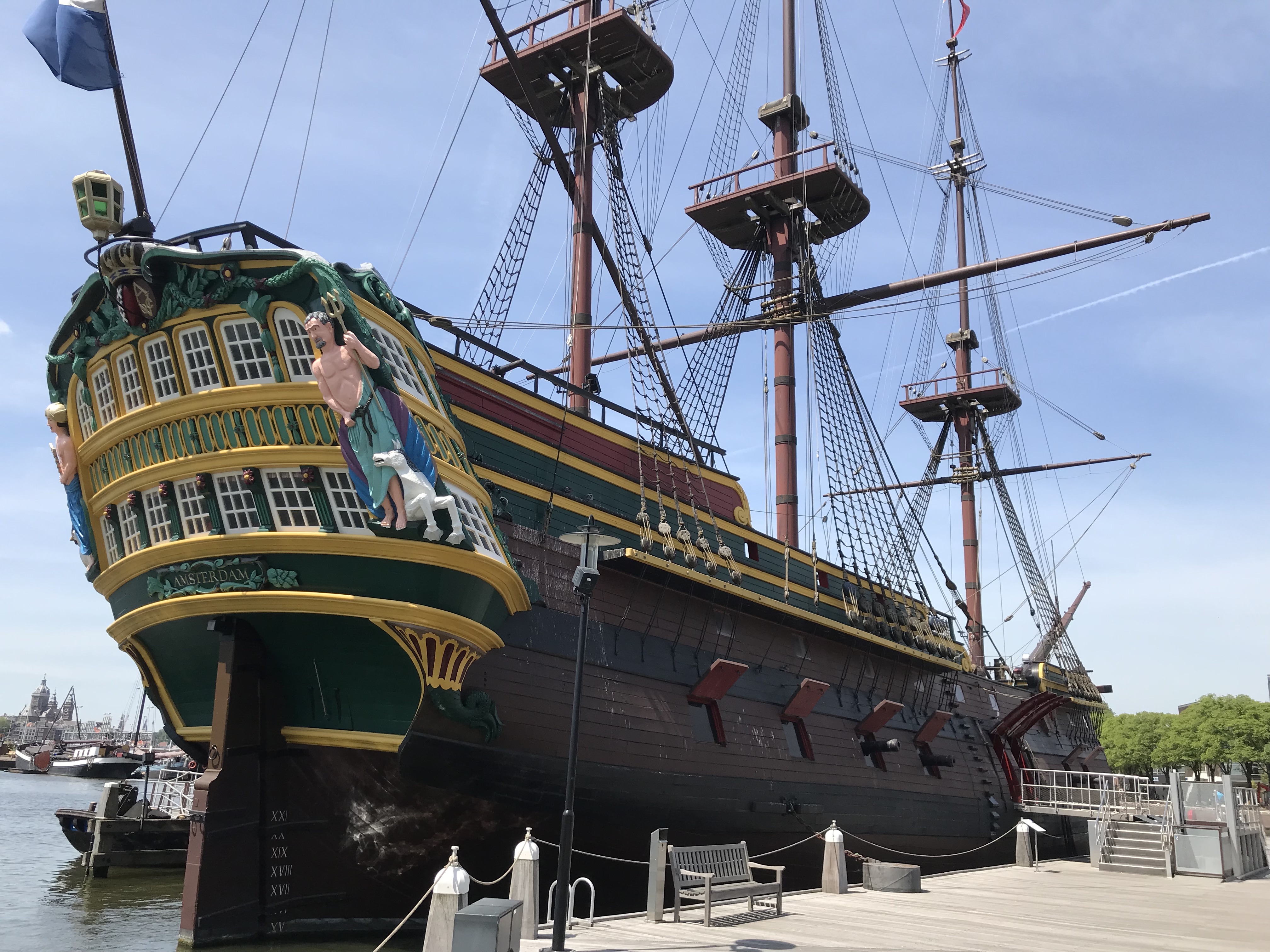
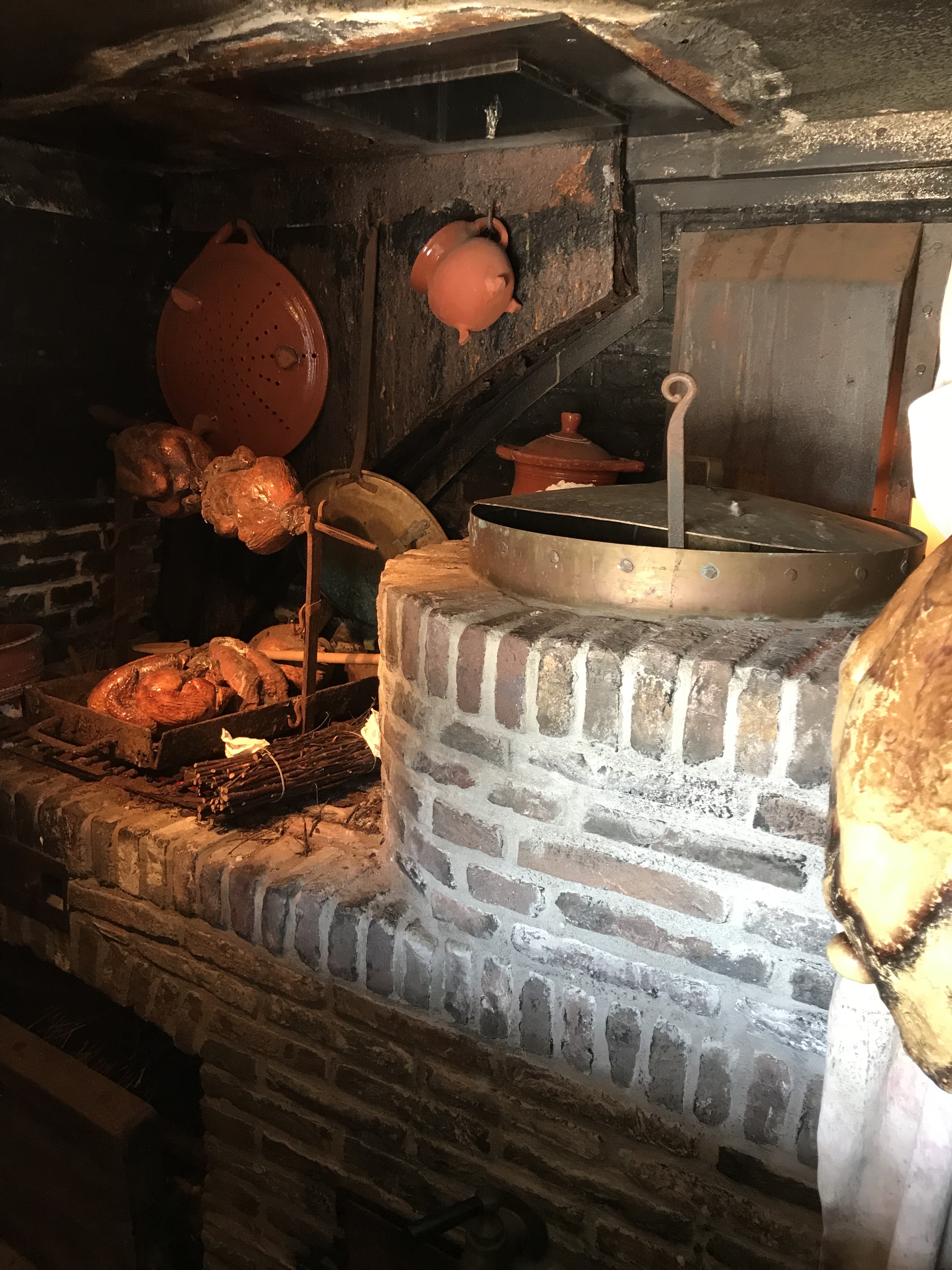
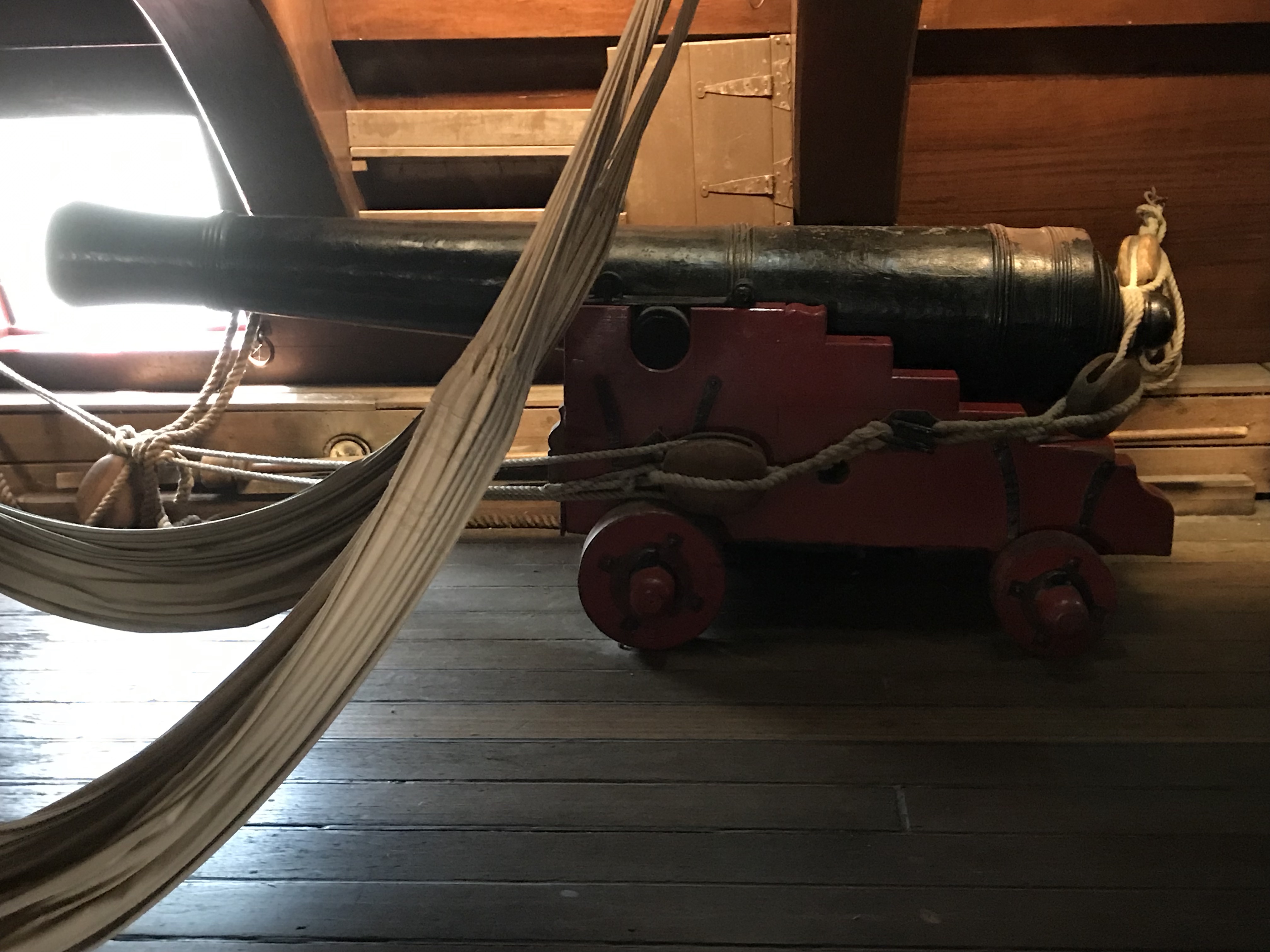
After learning a good deal on the Dutch and their achievements in colonization it seemed only right to visit the Maritime Museum (about a 25 minute walk from Oost Zeburg.) The museum was much larger than I fathomed, and honestly I couldn’t see it all within my given time. I had seen their replica ship `passing by on the tram a few days earlier so I decided to head immediately to the dock. Stepping onto the ship was very amusing, as it felt like I was setting sail for a distant land in the unknown. Everything was authentic as one could hope. The ship was much larger than I had imagined once aboard. The main entrance welcomes you to the area where the sailors would rest, but also prepare and engage during battle. There were plenty of canons that I’m sure would put a solid hole in anything standing in its way. Hammocks hung across showing how the sailors slept, but I’d assume the true amount would be overbearing for a tourist to maneuver through on the ship. The masts were standing tall, and the rope ladders all taught and ready for someone to climb. Looking up to the very highest point made me realize how brave the men aboard a ship like this must’ve been. The cooks corner room was also on display, making me realize how difficult it must have been to prepare a meal for so many men (and women) with only a certain amount of available space. Everything was so compact on the ship. The only area where I didn’t have to crouch was the very bottom floor, where the crew would store supplies for trade such as clove, cinnamon, sugar, and other spices.
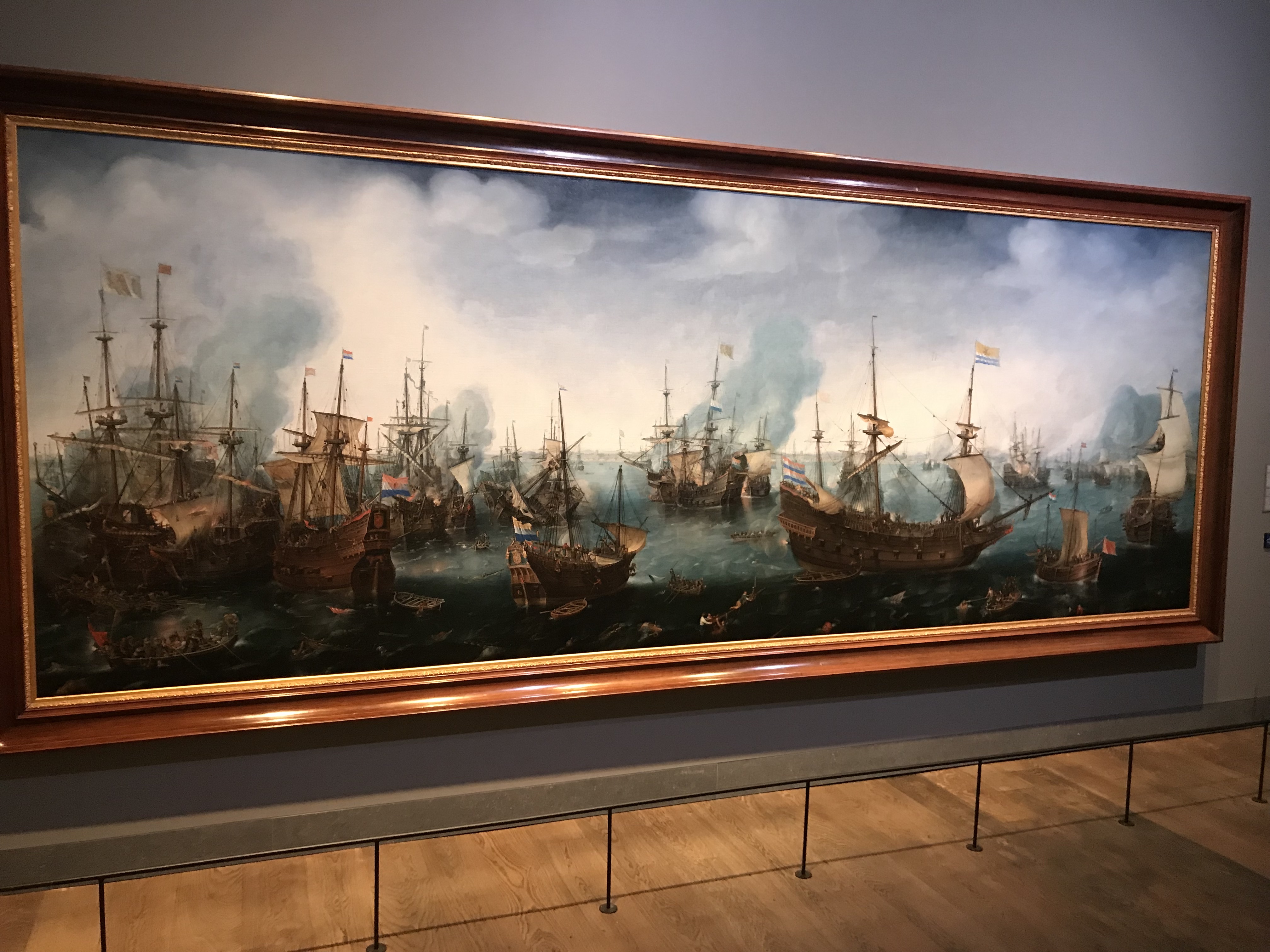
As I walked throughout the rest of the museum, I came across a painting resembling Dutch fleets battling the Spanish Royal fleets. The painting is quite large in size itself, representing the grandiose event that occurred. It made me reflect on the size of the ship I had just been on, and during the 17th century, thousands of ship like that were in the port of Amsterdam, sailing out to trade with the rest of the world, or hijack the Spanish fleets. It must have been a remarkable view to have seen during that time. On the same note, it’s quite beguiling to fathom that many of those ships were transporting humans whom would soon meet their death either by inhumane conditions aboard the ships or once sold and worked literally to death as a slave. Some “600,000 or 5 percent of the 12.5 million enslaved Africans destined for the ‘middle passage’ across the Atlantic.” (pg. 52)
 Amsterdam to Brussels