Visiting Rotterdam today was very different than the other experiences in the Netherlands. We arrived not exactly at the city center, but when we came out from the station we were in a very central and meaningful spot to Rotterdam’s history especially from the time of WW2. “ Only ‘Fortress Holland’ and the isolated province of Zeeland in the south held out against the German forces when on the early afternoon of May 14 the German Luftwaffe bombed the city of Rotterdam, completely destroying the city center and killing eight hundred civilians.” (pg. 58) This bombing was the turning point of the Dutch resisting the Nazi powers. After more cities were threatened to be bombed, General Henri Winkelman was forced to capitulate on May 15, 1940.
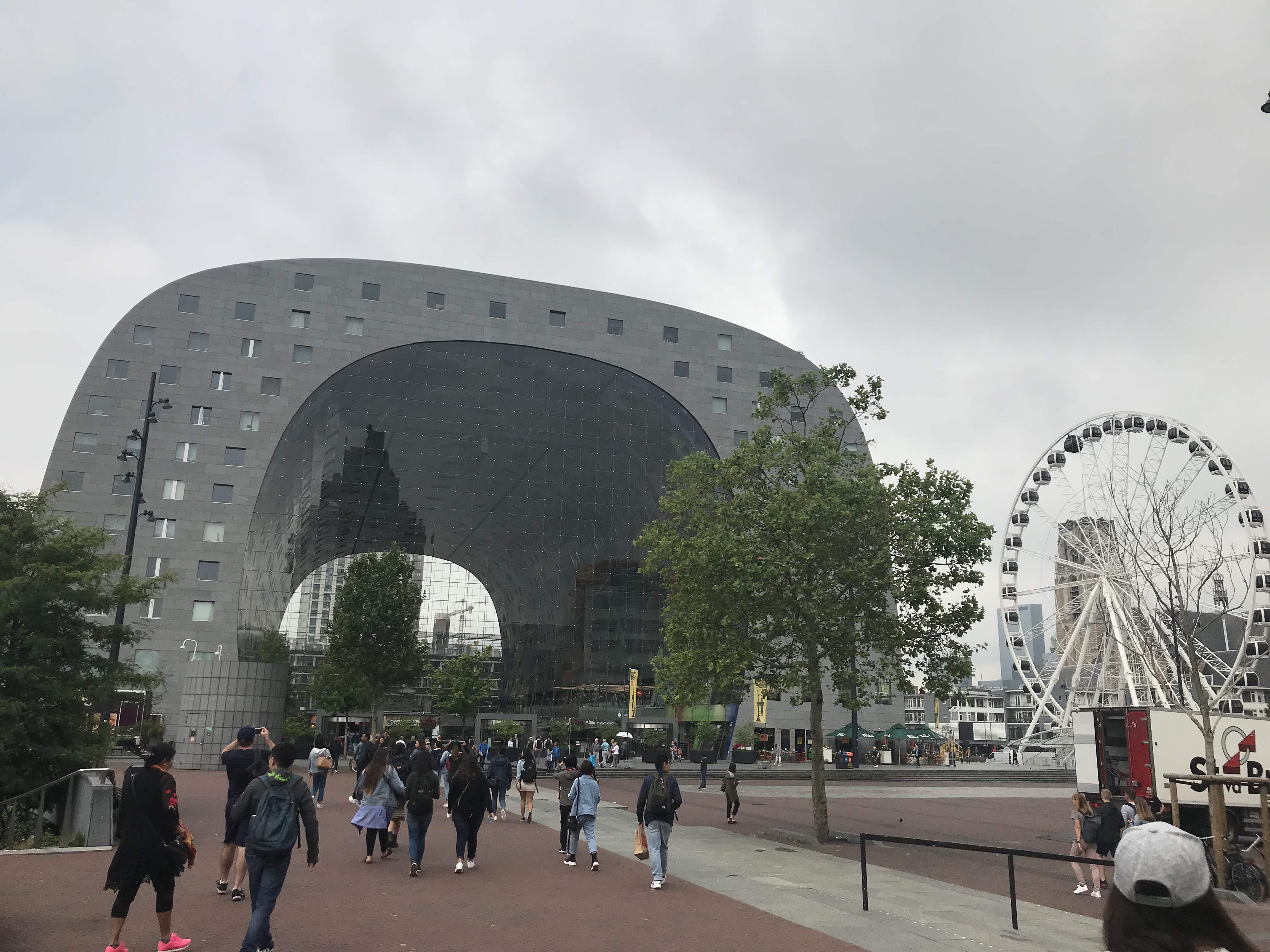
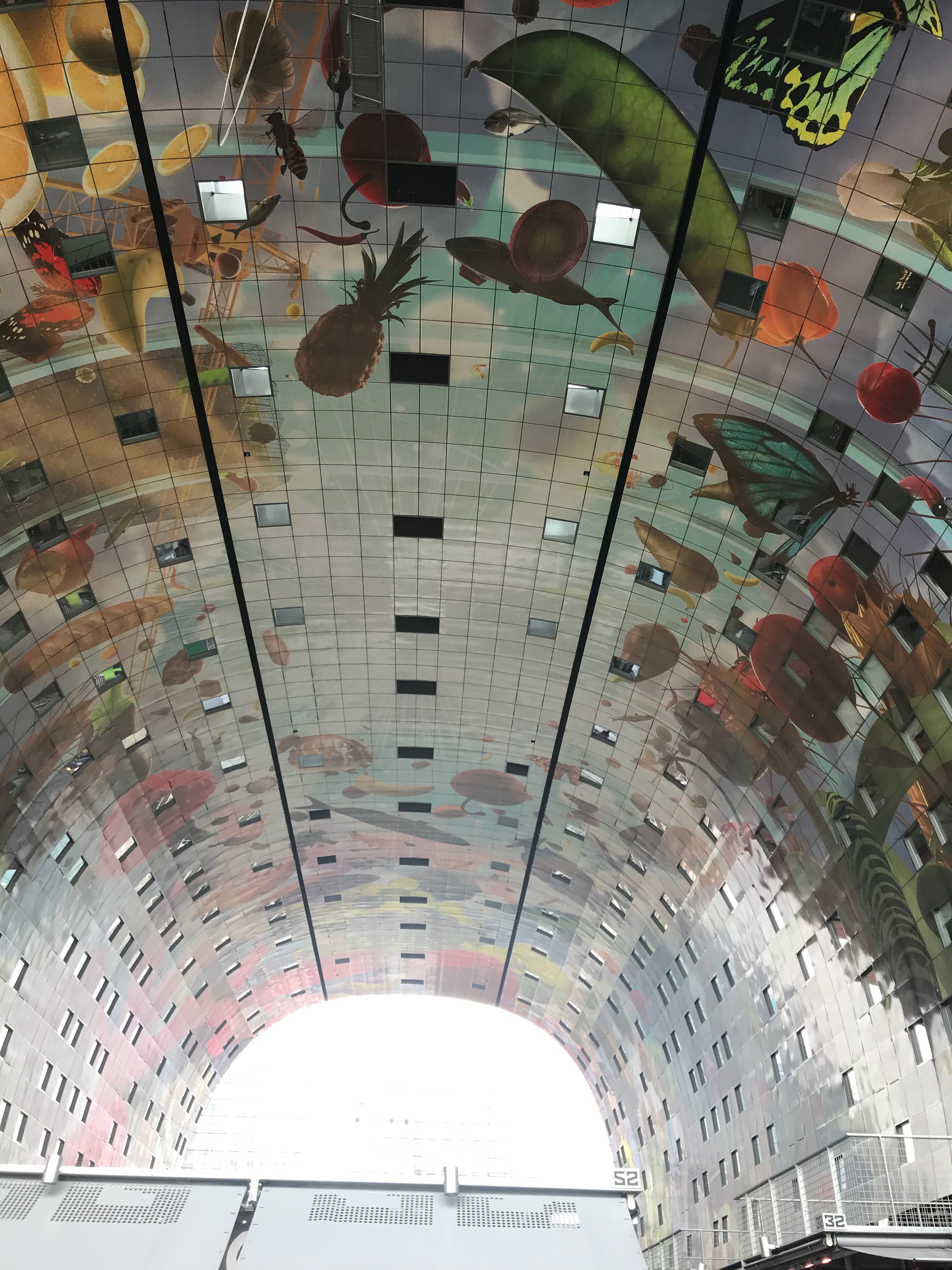
Walking around Rotterdam’s old city center didn’t feel like a normal square with historical attachments. The architecture was modern and had no affiliation to a traditional Dutch center. A large ferris wheel and modern marketplace were constructed, making the area feel like a new city such as the one’s in the U.S. The new Market Hall was very interesting to walk through. It was filled with international foods and felt like a new age bazaar, all while being sheltered by a large apartment structure in the shape of half a circle. The apartment windows were facing the interior side of the marketplace. The walls were brightly painted with different objects such as fruit, people, and musical instruments.
As we walked along the city streets, we cam upon a statue near the maritime museum. It was in the shape of a human reaching out for help while in pain, and torn from its body was the heart, leaving a large hole. This gives a very intimate and strong intent that the statue is in representation of the city of Rotterdam. Rotterdam lost so many lives and homes, as well as its heart, the city center. Rotterdam is often called the city without a heart. It’s a lost soul in a way, trying to find itself in this new modern era, all while trying to hold on to its history and roots that are remaining.
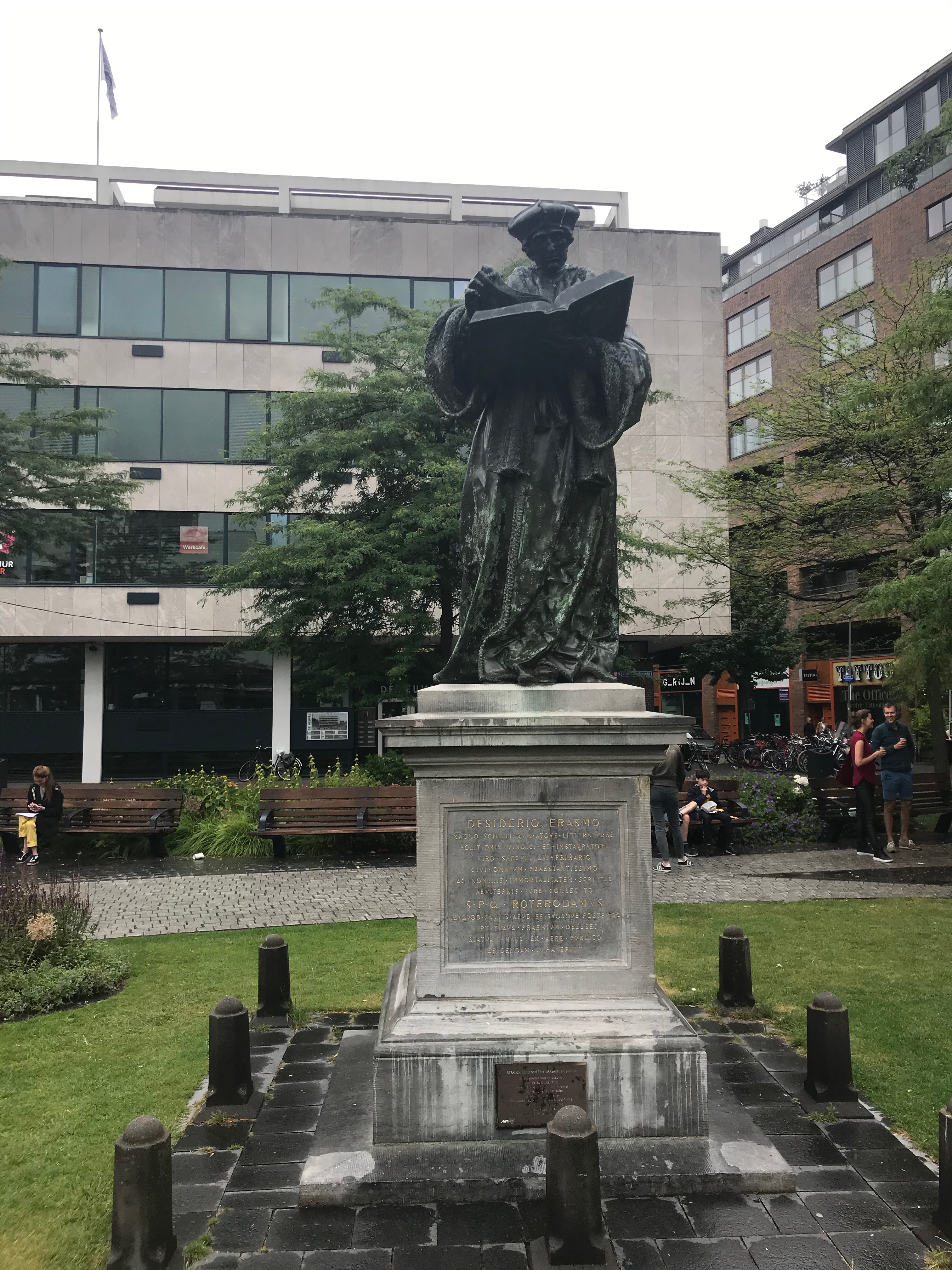
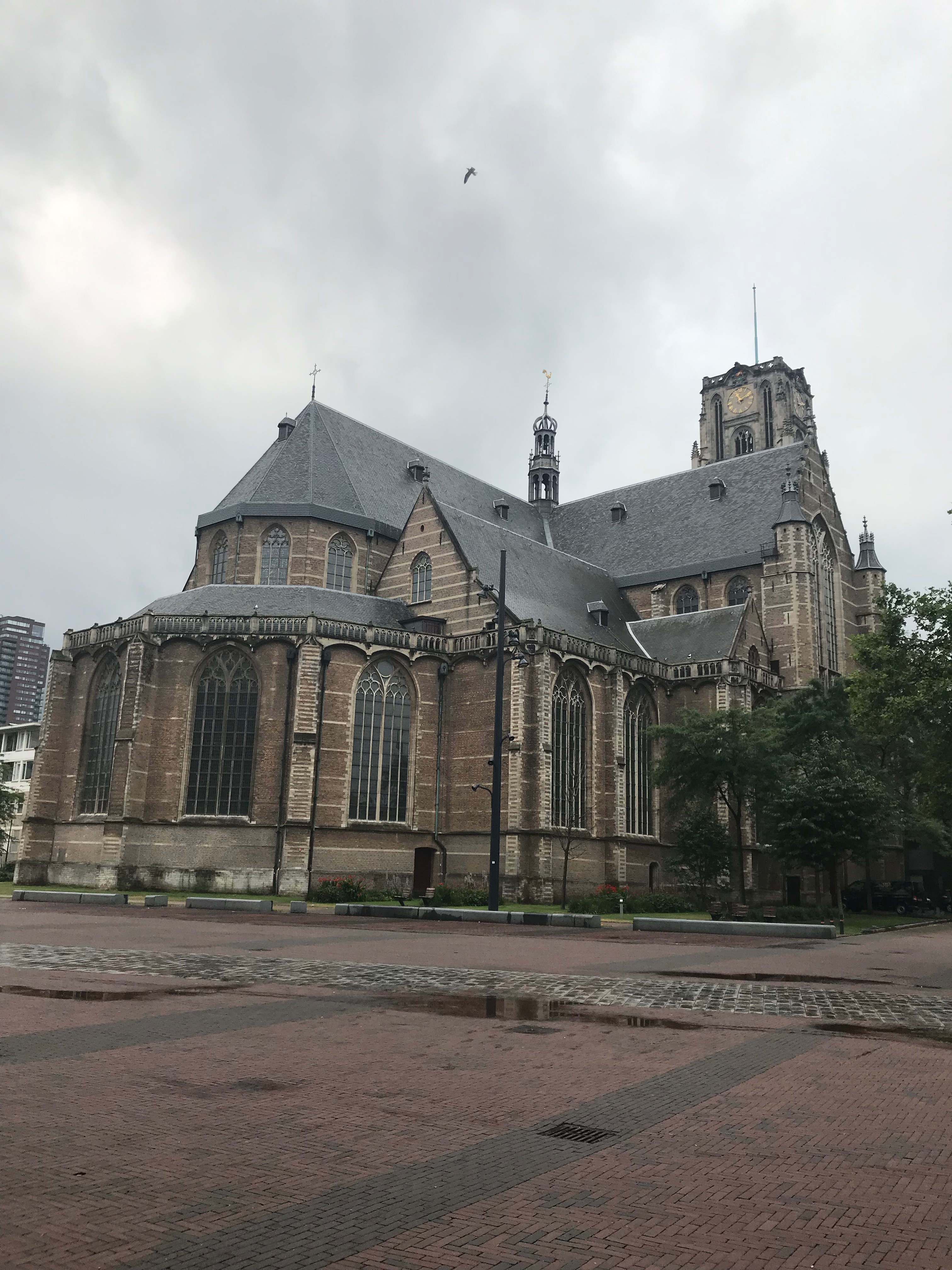
One important piece of history that Rotterdam can always be proud of is it being the birthplace of Desiderius Erasmus Roterodamus, in 1466. Erasmus was a Dutch Christian humanist who is widely considered to have been the greatest scholar of the northern Renaissance. Rotterdam also has a statue of Erasmus, which just so happens to be the oldest statue in all of the Netherlands. It stands in Grote Kerkplein, just a few feet from the Laurenskerk, which is the oldest piece of architecture left in Rotterdam.
Although there is not much of Rotterdam prior to 1940, there is a new hopeful energy about the city. Potential lies in Rotterdam, as real estate is constantly increasing and the University of Rotterdam is becoming more and more recognized within Europe. Architecture is a staple within the city, as new bridges have been constructed bridging the gaps of the city, and skyscrapers are some of the most individual and forward thinking in all of Europe. Let us not forget that Rotterdam is now officially the largest port in all of Europe, and was at one point the busiest port in all of the world.The bombing may have affected the city forever, but the people of Rotterdam are optimistic and creating a new identity for the city. It’s definitely a city of its own, and worth a visit.
 Amsterdam to Brussels